Essential Tremor at work is a documented occupational challenge for millions of people managing this neurological condition. Essential Tremor causes involuntary hand tremors that affect writing, typing, tool handling, and client-facing tasks across nearly every professional setting. This article covers practical management strategies, assistive tools, ADA accommodation rights, and medical options for maintaining professional independence.
How Essential Tremor Affects Job Performance
Essential Tremor produces action and postural tremors, meaning shaking occurs during movement and sustained positions rather than at rest. In professional settings, this directly impairs writing, keyboarding, mouse control, and tool handling. NIH clinical data indicates that ET leads to disability and decreased quality of life in 75% of cases. Impairment varies by job role and tremor severity. ET's occupational profile is also distinct from Parkinson's Disease, which produces a resting tremor rather than one triggered by movement.
The Emotional Impact: Embarrassment, Concealment, and Career Anxiety
Beyond the physical impairment, Essential Tremor at work carries a high emotional cost. Patients commonly develop concealment strategies: sitting on their hands during meetings, holding objects in their laps, avoiding signing documents in front of others, or arriving early to steady their nerves before presentations. Colleagues may misattribute visible tremor to anxiety or intoxication, a misperception with real professional consequences. These behaviors are cognitively demanding and unsustainable. Gaining control through evidence-based management shifts the professional experience far more effectively than concealment.
Which Professions Are Most Affected by Essential Tremor
Occupational impact varies by profession, but no career category is immune. High-precision roles carry the greatest functional challenge: surgeons, dentists, laboratory technicians, artists, and skilled tradespeople depend on fine dexterity that ET directly impairs. Office and administrative professionals are affected in keyboarding, signing, and mouse-intensive tasks. Communication-heavy roles, including attorneys, educators, and sales professionals, may also experience voice tremor. The key question is not whether a profession can continue but how task-level modifications and management strategies best support ongoing function.
Your Rights at Work: Essential Tremor and the ADA
Under the Americans with Disabilities Act, coverage depends on functional impact rather than diagnosis. A person may qualify if their condition substantially limits a major life activity such as writing, typing, or verbal communication. Whether ET qualifies depends on the severity of tremor and the job context. Employees are not required to disclose a specific diagnosis; functional impact information is sufficient. Employers are then obligated to engage in the interactive process for accommodations. Consulting HR or an employment attorney is recommended, as outcomes depend on individual circumstances.
Workplace Accommodations That Help: A Practical Overview

Workplace accommodations for Essential Tremor span several task categories. For writing: grip-adapted pens, signature stamps, or digital signature tools. For typing: ergonomic keyboards, keyguards, voice-to-text software, or alternative input devices. For physical tasks: forearm rests and modified equipment setups. For scheduling: flexible start times, precision tasks scheduled during periods of lower tremor, or additional time for fine-motor work. Remote work options reduce high-scrutiny social demands. Not all accommodations require formal disclosure. Initiating a conversation with HR or occupational health is an appropriate first step.
Assistive Technology and Tools for the Workplace
Essential Tremor and typing present one of the most common occupational challenges for ET patients. Several hand tremor assistive devices and technology categories reduce Essential Tremor's impact on professional tasks. For writing, weighted pens and grip adapters improve stability. For typing, ergonomic keyboards, keyguards that prevent accidental key activation, and adjustable forearm rests reduce error rates. Voice-to-text software eliminates dependence on the keyboard for document-heavy roles. Alternative mice, including trackballs and joysticks, reduce the precision required. For tool handling in trades or clinical roles, wrist- and forearm-stabilization supports reduce tremor amplitude. An occupational therapist can recommend the right combination for a specific job.
Medical Management Options That Support Occupational Function
Medical management of Essential Tremor is directly relevant to professional function. Propranolol, a beta-blocker, reduces tremor by dampening the sympathetic nervous system response and can be used on an as-needed basis before high-stakes events such as presentations or client meetings. Primidone is an established first-line medication for ongoing management. Supportive therapy, including occupational therapy and psychological support, is an established component of Essential Tremor management. For severe cases not responding to medication, deep brain stimulation and focused ultrasound are advanced options. All treatment decisions require direction from a neurologist. There is currently no cure for Essential Tremor, but effective management supports continued professional function.
How to Talk to Your Employer About Essential Tremor
Disclosing Essential Tremor to an employer is a personal decision. No legal obligation exists until an accommodation is needed. When requesting an accommodation under the ADA, an employee must acknowledge a functional limitation but is not required to share a specific diagnosis. A written request creates a documented record and initiates the employer's obligation to respond. Employers are entitled to functional impact information, not a full medical history. For disputed accommodations or complex employment structures, involving HR or an employment attorney early protects the employee's position.
Lifestyle and Workplace Triggers to Manage (Evidence-Based Only)
Several modifiable factors exacerbate Essential Tremor in workplace settings. Caffeine increases sympathetic nervous system activity and worsens tremor amplitude; reducing it is a practical first step. Fatigue increases tremor severity: precision-dependent work is best placed earlier in the day or after rest. Temperature sensitivity is documented in ET, and a cooler workspace can reduce exacerbation. Forearm support during typing and writing stabilizes the arm and reduces the amplitude of action tremor. An occupational therapist can assess the workspace and recommend adjustments matched to job demands.
When Essential Tremor Affects Job Safety
In safety-critical professions, Essential Tremor requires honest self-assessment and medical input. Jobs involving heavy machinery, commercial driving, surgical procedures, or sharp-instrument handling carry a genuine risk when hand tremor is unmanaged. This assessment is a matter of patient self-protection, not external judgment. Medical treatment can sometimes reduce tremor to a level that permits safe continuation in a role. A movement disorder specialist is the right starting point for evaluating whether specific tasks remain safely within reach and what management steps support that outcome.
How the Steadi-3 Supports Professional Independence

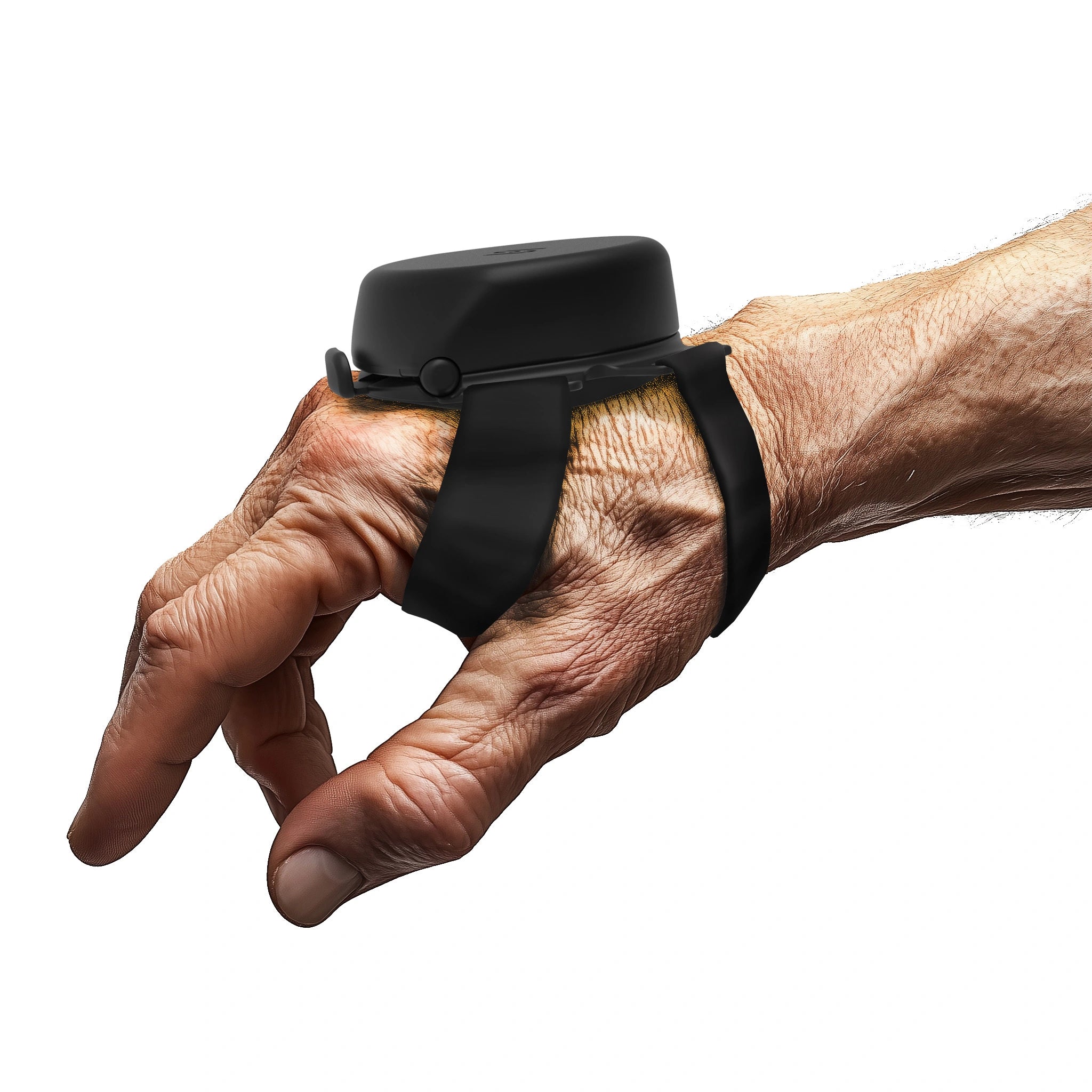
Among hand tremor assistive devices for professional use, the Steadi-3 most directly addresses action and postural tremors that affect writing, signing, and tool handling. As an FDA-registered Class I medical device that uses passive magnetic stabilization, it requires no batteries, charging, or electronic components. Validated in a placebo-controlled study in which 84% of users experienced reduced tremor, the Steadi-3 is one option alongside medical treatment and accommodations. A healthcare provider can help determine whether it fits a patient's specific occupational needs.
Conclusion
Managing tremors in the workplace is achievable through a combination of medical treatment, workplace accommodations, assistive technology, and clear professional communication. The core steps: establish care with a neurologist, explore accommodation options with HR, work with an occupational therapist to identify assistive tools, and understand ADA rights. There is currently no cure for Essential Tremor, but professional independence can be maintained. Assistive devices, situational medication, and structured workplace modifications provide patients with a realistic path to continued career functioning and independence.