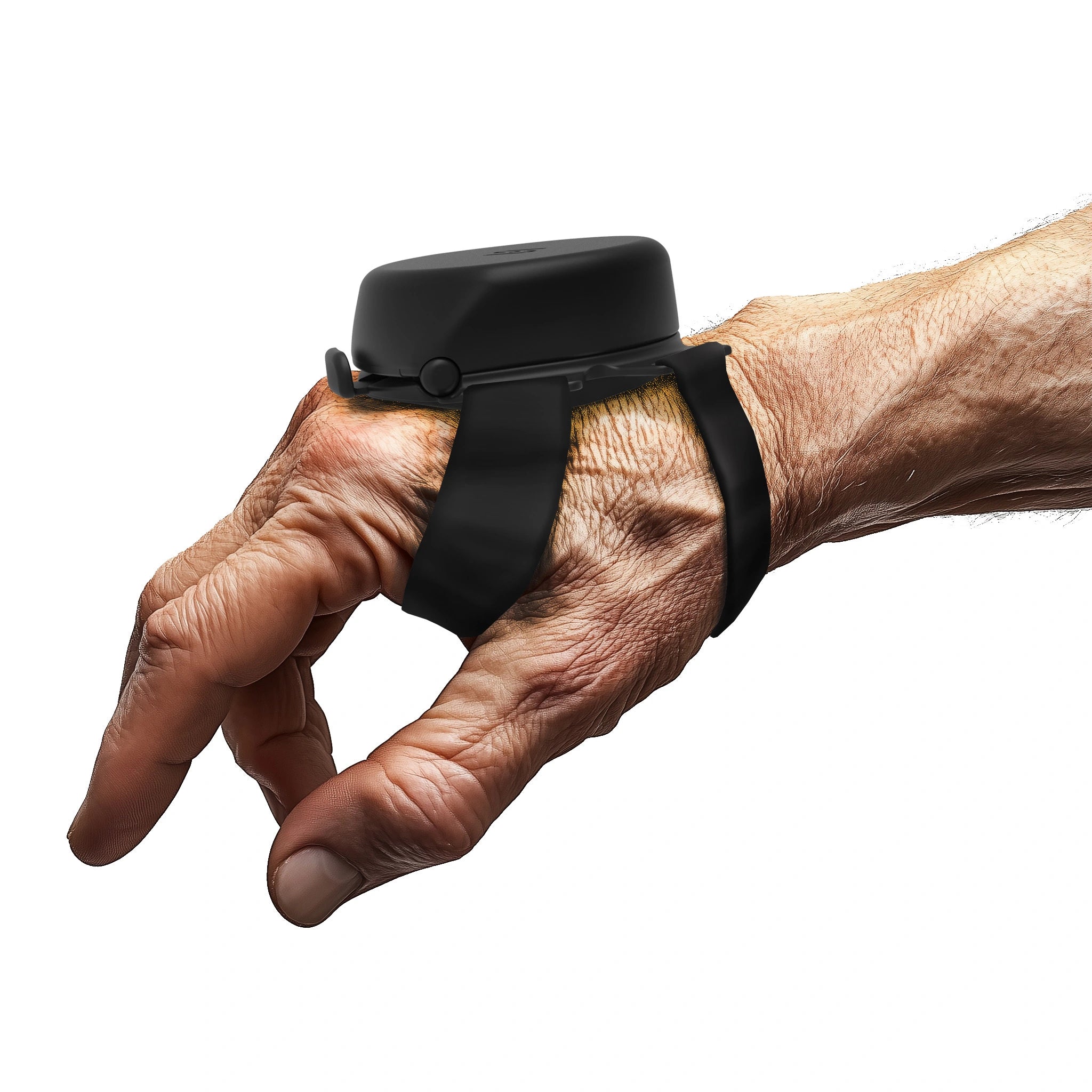
Finding gifts for someone with Parkinson's Disease means making a decision that actually improves a person's daily life, not just acknowledging their diagnosis. This guide is written for the buyer, not the patient. It covers how to match a gift to the person's current symptoms and stage, which categories deliver daily functional value, and how FSA and HSA funds can make higher-impact options financially accessible.
Buying a Gift for Someone with Parkinson's — Where to Start
Most gift guides skip the most important step: figuring out what the person actually needs before browsing any product list. Parkinson's Disease is progressive, and symptoms vary widely between individuals. A gift that helps someone in early-stage Parkinson's may go unused by someone at a more advanced stage, and vice versa. Matching the gift to the person's current functional challenges, rather than buying for the diagnosis in the abstract, is what separates a gift that earns daily use from one that sits in a closet.
Ask These 3 Questions Before You Shop
Three questions will narrow any gift decision before you open a single product page. First: what daily task is hardest for them right now? The answer shapes which functional category will have the most impact. Second: what stage of Parkinson's Disease are they in? Stage shapes what is practical and safe. Third: what have they already tried? Ruling out tools they own or have abandoned avoids duplication and signals that the gift reflects genuine attention to their experience rather than a general Google search.
What Stage of Parkinson's Are They In? (Why It Matters for Gifts)

Neurologists and occupational therapists assess Parkinson's Disease function by stage, and gift suitability follows the same logic. At early stages, tremor management tools and eating independence aids deliver the most daily value, preserving function before compensatory habits form. At mid-stage, dressing aids and smart home technology address the expanding range of daily tasks affected. At advanced stages, mobility aids, voice-activated devices, and caregiver-support tools take priority. Gifts given out of sync with the person's current stage often go unused, even when the intention behind them is right.
The Best Practical Gifts for Parkinson's (Tested and Trusted by Caregivers)
The most reliable gift categories for Parkinson's Disease patients directly address a real daily functional barrier. Across caregiver communities and occupational therapy guidance, four categories consistently benefit from daily use: tremor management, independence in eating and drinking, daily routines and dressing, and emotional well-being. Each category below maps to a specific symptom cluster, so the gift serves the person's actual experience rather than the general concept of Parkinson's Disease.
For Tremor Management — the Steadi-3 Tremor Glove
Hand tremor is the single most disruptive daily symptom for many Parkinson's Disease patients, and most gift guides stop at weighted utensils as the solution. The Steadi-3 represents an entirely different category. It is a battery-free, FDA-registered Class I medical device that uses patented passive magnetic stabilization to reduce hand tremor during eating, writing, and daily tasks. A placebo-controlled clinical study showed a reduction in tremor in 84% of users. No charging, no electronics, and no prescription are required.
For Eating and Drinking Independence — Adaptive Utensils
Weighted utensils are among the most consistently recommended adaptive gifts for patients with Parkinson's Disease, and they are used daily because mealtimes are a recurring challenge. Weighted forks and spoons add mass that counteracts tremor amplitude during eating; a utensil weight of 7 ounces or more is generally associated with a meaningful reduction in tremor. Ergonomic grip designs reduce hand fatigue over a full meal. Break-resistant mugs with wide handles support independent drinking. These are lower-cost, high-frequency-use gifts that address eating independence, though they compensate for tremor impact during a specific task rather than reducing the tremor itself.
For Daily Routine — Dressing Aids and Home Gadgets
Motor symptoms affect dressing and home tasks for a large majority of Parkinson's Disease patients, and occupational therapy plans routinely include adaptive clothing and dressing aids as core independence tools. Magnetic-button shirts and front-zip garments eliminate the fine-motor demands of traditional fasteners. Long-handled shoe horns allow independent dressing without bending. Electric jar openers and can openers reduce grip fatigue in the kitchen. Voice-activated smart speakers support reminders, calls, and appliance control without requiring precise button or touchscreen operation. Each of these tools extends the recipient's ability to complete daily routine tasks without assistance.
For Emotional Wellbeing — Connection, Hobbies, and Entertainment
Parkinson's Disease affects emotional well-being and social participation alongside motor function. Non-motor symptoms, including depression and social withdrawal, are documented features of the condition, and experience-based gifts can meaningfully address what motor-focused gifts cannot. Digital photo frames loaded with family photos and accessible remotely by relatives support daily connection. Audiobook subscriptions remove the fine-motor demands of holding and turning pages. Large-piece puzzle sets and brain games provide cognitive engagement. Streaming subscriptions address entertainment and social isolation for patients with mobility limitations.
Gifts That Actually Get Used (vs. Gifts That Sit in a Drawer)
The most appreciated gifts for Parkinson's Disease patients are those that remove a daily frustration, not those that simply acknowledge the disease. Caregivers and clinical social workers consistently observe that symbolic or comfort-oriented gifts are set aside more quickly than functional ones. The practical test for any gift in this context is direct: does this make a specific daily task meaningfully easier? Gifts that pass that test earn daily use and are reported as more valued than higher-cost items that offer general wellness benefits without solving a real task-level problem.
Why Practical Gifts Win Over Decorative Ones
Weighted blankets and comfort items address ease rather than function. Adaptive utensils and tremor-management devices address the daily tasks Parkinson's Disease patients identify as most limiting: eating independently, writing, gripping objects, and completing morning routines without assistance. The distinction matters because the most meaningful gifts for Parkinson's Disease are those that extend control over specific daily activities. A gift that gives something back to the recipient, rather than asking them to accept a reduced version of their routine, is the one still in use six months later.
Can You Use FSA/HSA Funds for a Parkinson's Gift?
Many caregivers and patients are unaware that FDA-registered medical devices may qualify for FSA and HSA reimbursement, making higher-value adaptive gifts significantly more affordable. The Steadi-3 is FDA Class I registered and may qualify as an eligible medical device expense under most flexible spending and health savings account plans. Using pre-tax flex funds effectively reduces the out-of-pocket cost of the device. For caregivers with expiring year-end FSA balances, this purchasing angle is both financially practical and time-sensitive.
Medical Device Eligibility Explained
FSA and HSA eligibility for a medical device depends on the device's FDA registration status and whether it is used to treat a diagnosed medical condition. IRS Publication 502 defines qualified medical expenses, and FDA-registered devices used to treat a confirmed diagnosis commonly qualify. A Letter of Medical Necessity from a treating physician strengthens the case for reimbursement and may be required by some plan administrators. Steadiwear provides a downloadable Letter of Medical Necessity template. Confirming eligibility with the plan administrator before purchase is advisable, as plan terms vary.
End-of-Year FSA Spending — Timing Your Gift Purchase
Most flexible spending accounts operate on a calendar year, with unused funds forfeited after December 31 under standard plan rules. Some plans offer a grace period or limited rollover, but the use-it-or-lose-it structure applies to most FSA accounts. For caregivers purchasing a Parkinson's Disease gift during the holiday season, this creates a genuine and practical deadline. Converting expiring pre-tax FSA dollars into a functional daily-use device before year-end is both financially sound and directly beneficial to the recipient. The combination of the gifting season and FSA deadline makes the fourth quarter a meaningful purchase window for this category.
The Steadi-3's 30-Day Money-Back Guarantee Removes All Risk

A clinically validated tremor-stabilization device is a high-investment gift, and hesitation to purchase is a reasonable response. The Steadi-3 comes with a 30-day money-back guarantee, which means the recipient can confirm real-world benefit during daily use before the purchase is final. If a hand tremor responds to passive magnetic stabilization, the benefit is immediately observable in tasks such as eating and writing. If the fit or symptom match is not right, the return process is straightforward. This trial period removes the primary objection to choosing a medical device as a gift. FSA and HSA funds may also apply; see FSA and HSA eligibility for details.
Conclusion:
Building trust with a caregiver audience means being willing to advise against common mistakes. Gifts that require fine motor manipulation to use, such as intricate craft kits, puzzle boxes with small components, or appliances with complex button arrays, can frustrate rather than help. Gift cards to physical retail locations create logistical challenges for recipients with mobility limitations. Heavy items, including some weighted products, may be difficult for patients experiencing fatigue, weakness, or tremor to handle. Novelty items that acknowledge the diagnosis without solving a daily task problem rarely earn use. The principle is consistent across all gifting decisions: prioritize control and independence over symbolic gesture.