

Many people first notice a tremor during a simple task. You pick up a cup of coffee and your hands shake when holding things. You try to hold your phone steady or lift a fork, and the movement becomes visible.
This type of shaking often happens during action rather than rest. In many cases, it is related to a category of movement disorders known as action tremors. Understanding why tremors appear during specific activities can help reduce worry and guide you toward the right next steps.
In this guide, we will explain why hands shake when holding things, the most common causes of tremor when holding objects, how doctors diagnose the condition, and practical ways to stabilize your hands during everyday tasks.
Understanding Action Tremors vs. Resting Tremors
Not all tremors occur in the same way. Some appear when the body is relaxed, while others show up only when muscles are being used.
When people say their hands shake when holding things, they are usually describing an action tremor.
What happens in your brain during action
Every voluntary movement begins with signals from the brain. The motor cortex sends instructions through neural pathways to muscles in the arms and hands. These signals coordinate muscle contractions that allow you to grip, lift, and hold objects.
For movements to stay smooth and controlled, the brain relies heavily on the cerebellum. This region acts like a coordination center, helping fine tune movement and maintain stability.
When these signals become slightly irregular or overactive, small rhythmic contractions can occur in the muscles. The result is a tremor that becomes visible when the muscles are engaged.
That is why some people notice shaking only when they reach for a cup, extend their arm, or try to hold something steady.
Why tremors appear when holding objects
Holding objects requires constant micro adjustments from your muscles.
Even something simple like holding a phone requires your brain to stabilize the wrist, fingers, and forearm. If the coordination signals fluctuate, those adjustments become rhythmic rather than smooth. This creates the shaking motion associated with an action tremor.
People may notice this tremor during tasks such as
Holding a glass of water
Using utensils during meals
Holding a smartphone for texting or photos
Writing with a pen
Extending the arms in front of the body
These activities all require active muscle engagement, which is why tremor can appear.
The key difference from Parkinson's tremor
A common concern people have is whether tremor automatically means Parkinson's Disease.
The tremor pattern is often different.
Parkinson's tremor typically appears when the hands are at rest. For example, the shaking may occur when the hands are sitting in the lap and decrease when the person reaches for something.
In contrast, an action tremor appears during movement or while holding objects in position.
Understanding this difference can help reduce unnecessary worry while encouraging proper medical evaluation.
Common Causes of Tremors When Holding Things

There are several possible reasons why a tremor appears during movement or when holding objects. Some causes are temporary, while others are related to neurological conditions.
Essential Tremor (most common cause)
Essential Tremor is one of the most common movement disorders. It often causes an action tremor that becomes noticeable when using the hands.
People with Essential Tremor frequently report shaking during activities such as
Holding a cup or glass
Using utensils while eating
Writing or drawing
Holding a phone or remote control
The tremor usually affects the hands but can also involve the head or voice.
Essential Tremor is not life threatening, but it can make everyday tasks more difficult over time. Many people seek treatment because the tremor interferes with routine activities like eating and drinking.
You can explore the differences between tremor types in more detail here.
Physiological tremor (temporary)
Everyone has a small natural tremor known as physiological tremor. Under normal conditions it is so subtle that it cannot be seen.
Certain factors can temporarily amplify this tremor, including
Fatigue
Stress or anxiety
Caffeine consumption
Low blood sugar
Certain medications
When physiological tremor becomes stronger, it may cause noticeable shaking when lifting or holding objects. Once the triggering factor resolves, the tremor often decreases.
Cerebellar tremor
The cerebellum plays a key role in coordinating movement.
Damage or dysfunction in this area can lead to a cerebellar tremor, which often becomes more pronounced as the hand approaches a target. This pattern is sometimes called an intention tremor.
For example, the shaking may increase when someone tries to touch their nose or bring a spoon toward their mouth.
Enhanced physiological tremor
Enhanced physiological tremor occurs when the body’s normal tremor becomes amplified due to external influences.
Triggers may include
Certain medications
Hyperthyroidism
Alcohol withdrawal
High stress levels
Unlike chronic neurological tremors, enhanced physiological tremor often improves once the underlying cause is addressed.
Dystonic tremor
Dystonic tremor occurs in individuals with dystonia, a condition that causes involuntary muscle contractions.
These tremors may appear during specific tasks or positions. The shaking may also be irregular rather than rhythmic.
Because dystonic tremor can vary widely between individuals, a neurologist is typically required for accurate diagnosis.
Specific Situations Explained

Many people search for explanations after noticing shaking during a particular activity. Understanding why these situations trigger tremor can make the symptoms easier to manage.
Hands shake when holding phone
Holding a smartphone requires fine motor control.
The wrist must stabilize the device while the fingers maintain grip. For someone with an action tremor, these small adjustments can trigger visible shaking.
Because phones are light and often held at arm’s length, the tremor may appear stronger.
Tremor when holding a cup or glass
Holding a drink combines several challenging elements for the nervous system.
The hand must
Grip the cup securely
Maintain balance to avoid spills
Lift the object toward the mouth
These simultaneous adjustments can amplify tremor signals.
Many people first notice tremor during this exact scenario.
If drinking becomes difficult, this resource provides helpful strategies for stabilizing the hand during meals.
Shaking when writing or eating
Writing requires very precise hand control. Even small tremor movements become visible when the pen touches paper.
Similarly, eating involves coordinated wrist and finger movements while guiding food toward the mouth.
If these tasks have become frustrating, you may find practical assistance in this guide.
Tremor when arms are extended
Extending the arms activates the shoulder and forearm muscles. These muscles must hold tension to maintain the position.
For people with postural tremor, shaking appears when the arms remain extended against gravity.
This is one of the common ways neurologists evaluate tremor patterns during an exam.
How to Get a Proper Diagnosis
If your hands shake when holding things and the tremor persists, a medical evaluation can help determine the cause.
A neurologist who specializes in movement disorders is often the best professional to consult.
What to track before your appointment
Before visiting a doctor, it can be helpful to observe patterns in your tremor.
Consider noting
When the tremor started
Which activities trigger shaking
Whether the tremor appears at rest or during movement
Whether stress, fatigue, or caffeine make symptoms worse
Recording short videos of tremor during daily tasks can also help doctors evaluate the pattern more accurately.
Tests your doctor will perform
Diagnosis usually begins with a neurological examination.
Your doctor may ask you to perform simple movements such as
Holding your arms outstretched
Touching your finger to your nose
Writing a sentence
Drawing a spiral
These tasks help identify the tremor type.
Additional tests may sometimes be recommended to rule out metabolic or neurological causes.
Questions to ask your neurologist
During the appointment, it can help to ask
What type of tremor do I have
Could this be Essential Tremor or another condition
What treatments are available
How might symptoms change over time
Clear communication with your healthcare provider helps ensure you receive the most appropriate care.
Treatment Options for Action Tremors
Treatment approaches depend on the cause and severity of the tremor. Some individuals need minimal intervention, while others benefit from targeted therapies.
Medications that help
Doctors sometimes prescribe medications that can reduce tremor intensity.
Common medication categories include
Beta blockers
Anti seizure medications
Other neurological medications depending on the tremor type
The effectiveness varies from person to person, and a physician will determine the most appropriate treatment plan.
Surgical options for severe cases
For severe tremors that do not respond to medication, surgical procedures may be considered.
One example is deep brain stimulation. This technique uses implanted electrodes to regulate abnormal brain signals.
Because surgery involves careful evaluation and risk assessment, it is typically reserved for more advanced cases.
Why wearable devices work well for action tremors
Many tremors become most noticeable during everyday tasks. That makes wearable stabilization devices a practical option.
Devices designed for action tremors can help reduce shaking during activities such as eating, drinking, or writing.
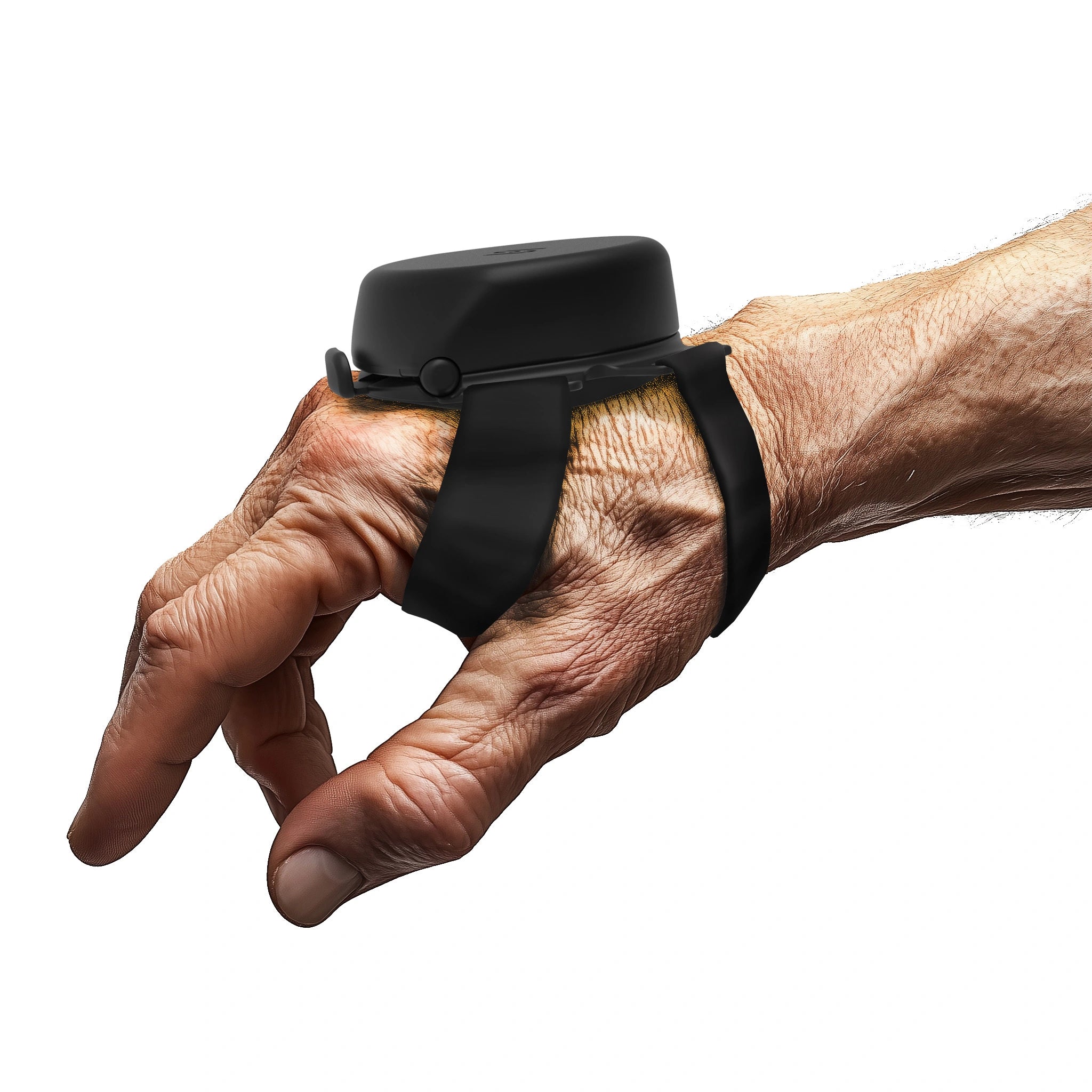
The Steadi-3 Tremor Glove was specifically designed to address tremor during movement. It uses a magnetic stabilization mechanism that adapts to tremor intensity while remaining lightweight and battery-free.
Because the glove works during active movement, many users find it particularly helpful for action tremors that appear when holding objects.
Immediate Tips to Reduce Shaking When Holding Objects
While long-term treatment plans are important, many people also want immediate strategies to stabilize their hands.
Several simple techniques can help reduce tremor during daily tasks.
Stabilization techniques
Using both hands to support an object can improve control.
For example
Hold a cup with two hands
Rest your elbow on a table while eating
Bring objects closer to your body instead of holding them at arm’s length
These strategies reduce the muscular effort required to stabilize the hand.
Weighted solutions
Adding weight to utensils or tools can sometimes dampen tremor.
Weighted pens, utensils, or wrist weights increase resistance, which can reduce the amplitude of shaking during movement.
However, weighted solutions may not work for everyone, especially if fatigue becomes an issue.
Adaptive equipment
Adaptive tools are specifically designed to make daily activities easier for people experiencing tremor.
Examples include
Stabilizing utensils
Non spill cups
Assistive writing tools
Wearable tremor stabilization devices
These solutions focus on improving control during tasks that require steady hand movement.
For individuals whose hands shake when holding things, assistive technology designed for action tremors can be particularly helpful.
Regain Stability During Everyday Tasks with the Steadi-3 Tremor Glove
For people whose hands shake when holding things, everyday activities like drinking from a cup, using utensils, or holding a phone can become frustrating. The Steadi-3 Tremor Glove is designed specifically to help stabilize the hand during these types of action tremors. Using a magnetic vibration absorber mechanism, the glove reduces tremor movement while your hand is actively performing tasks, allowing you to hold objects with greater control.
Unlike many assistive technologies, the Steadi-3 is lightweight, battery-free, and non-invasive. The device automatically adapts to tremor intensity during movement, helping users perform daily activities like eating, writing, and drinking more steadily. If action tremors make it difficult to hold objects, the Steadi-3 Tremor Glove offers a practical solution designed to support hand stability throughout the day.
Understanding and Managing Tremors When Holding Objects
If your hands shake when holding things, you are not alone. Tremors that appear during movement or while holding objects are often related to action tremors, which can occur for several different reasons. In many cases, these tremors are linked to conditions such as Essential Tremor or other neurological factors that affect how the brain coordinates movement. Identifying when and how your tremor appears is an important first step toward understanding what may be causing it.
If the shaking continues or begins to interfere with daily activities like eating, writing, or drinking, speaking with a neurologist can help clarify the cause and guide treatment options. Many people find that a combination of medical guidance, practical strategies, and assistive technology can significantly improve stability during everyday tasks. Devices designed specifically for action tremors, such as the Steadi 3 Tremor Glove, can help reduce shaking while holding objects, making daily activities more manageable and comfortable.

