

Does Alcohol Help Essential Tremor? The Short Answer
Roughly two-thirds of people with Essential Tremor see measurable improvement after a small amount of alcohol. The effect is real and objectively documented in clinical studies, not a placebo. Tremor amplitude often drops 50 to 70 percent within 15 to 30 minutes of ingestion. However, the suppression is short-lived, typically lasting one to four hours before wearing off completely. This response is specific to Essential Tremor. Not all tremor types respond to alcohol, which is why neurologists consider alcohol responsiveness a supportive diagnostic signal when evaluating patients.
Essential Tremor and Alcohol: What Happens in the Brain
Alcohol temporarily suppresses Essential Tremor but is not a treatment. ET involves overactive neurons in the cerebellum, the brain region that coordinates movement. Alcohol acts as a GABAergic agent, boosting the brain's main inhibitory system. It targets specific GABA-A receptors on cerebellar granule cells, reducing the hyperactivity that drives tremor. Imaging confirms alcohol decreases abnormal metabolic activity in ET patients — which is why researchers are developing non-intoxicating GABA-targeting drugs as future treatments.
How Much Alcohol Reduces Tremor, and for How Long
Research published in movement disorder literature shows tremor suppression occurs at blood alcohol levels of 0.04 to 0.075 grams per deciliter, below most US legal driving limits. Patient guidance from the National Tremor Foundation reports that approximately two units of alcohol can suppress tremor for roughly four hours. Onset is fast, typically 10 to 90 minutes after ingestion. The effect does not scale linearly: higher doses do not produce greater benefit. Individual response varies considerably, and around one-third of people with Essential Tremor show no clear response at all.
The Rebound Effect: Why Tremor Often Comes Back Worse
As alcohol clears the bloodstream, tremor typically returns, often more severely than baseline. This rebound effect is well-documented in the clinical literature and is commonly reported by patients. Repeated use creates tolerance: the same dose no longer provides the same relief. Users then need more alcohol more frequently to achieve the original benefit. Morning-after tremor can be measurably worse than a day without drinking at all. This is the mechanism by which alcohol-based tremor management slides into a cycle of escalating use and dependence.
Essential Tremor and Alcohol: Why Doctors Advise Caution
Medical consensus is clear. Guidance from major institutions advises that alcohol should not be relied upon as treatment for Essential Tremor. Long-term heavy drinking can damage the cerebellum, the brain region already affected in ET, potentially worsening the underlying condition. Research from Columbia University found that three daily drinks doubles long-term tremor risk. The pathway from self-medication to alcohol use disorder is well-documented in ET populations. This is not a moral judgment. It is a clinical pattern that neurologists recognize and monitor for.
What to Do If Alcohol Reduces Your Tremor
Alcohol responsiveness is itself diagnostically useful. It supports a diagnosis of Essential Tremor over other movement disorders and informs treatment selection. Share this observation with your neurologist rather than managing it alone. Roughly two-thirds of patients with familial Essential Tremor respond to alcohol, so the pattern often runs in families. Alcohol-responsive ET typically responds well to propranolol or primidone as first-line medication. Do not use alcohol as ongoing management. Use the responsiveness as clinical information, not a prescription. Track tremor severity in a daily journal.
Non-Drinking Alternatives for Managing Essential Tremor
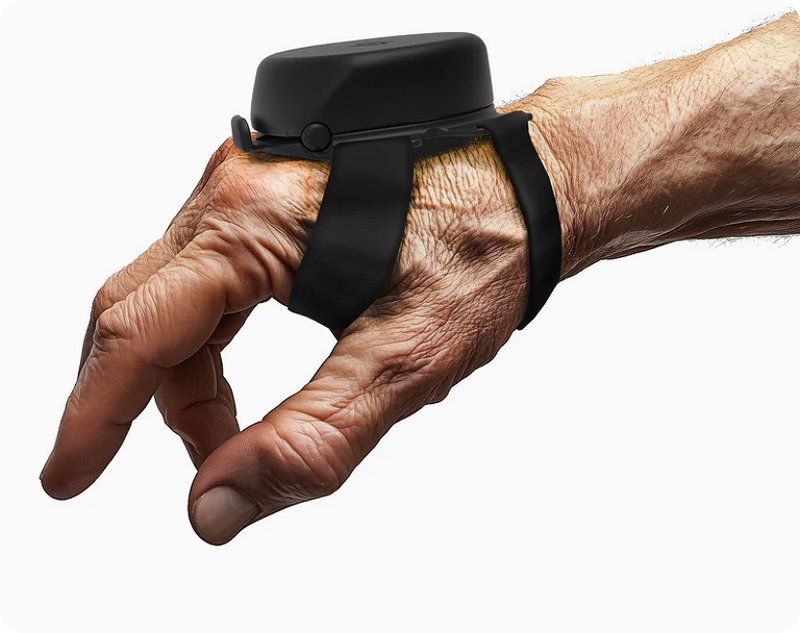
First-line medications propranolol and primidone provide sustained tremor relief without rebound. Surgical options for severe cases include deep-brain stimulation and MR-guided focused ultrasound. Emerging research into 1-octanol, a long-chain alcohol derivative, aims to replicate tremor suppression without intoxication. The Steadi-3 is a battery-free, FDA-registered wearable glove that has been clinically validated to reduce hand tremor during daily activities. It is FSA/HSA eligible. Lifestyle adjustments, including reducing caffeine intake, managing stress, and getting adequate sleep, also help. A combined approach consistently outperforms any single intervention.
Frequently Asked Questions