
Essential Tremor and Anxiety Disorder
For people living with Essential Tremor and anxiety disorder, the two conditions often reinforce each other. This page explains the clinical relationship, the anxiety types most commonly associated with ET, and how to discuss management options with a healthcare provider.

How Essential Tremor and Anxiety Are Clinically Linked
Clinical research confirms Essential Tremor and anxiety disorders co-occur at rates significantly higher than in the general population. A study published by the International Essential Tremor Foundation found that approximately 32.7% of ET patients also have an anxiety disorder. The relationship runs in both directions. Anxiety can amplify the severity of visible tremor, and the experience of living with uncontrollable tremor can trigger or worsen anxiety. This bidirectional pattern is now recognized as a non-motor dimension of ET, not a separate coincidence.
Why Anxiety Makes Essential Tremor Worse
When a person with Essential Tremor encounters a stressful or anxiety-provoking situation, the body releases adrenaline as part of its stress response. Adrenaline is a documented tremor-aggravator, increasing the amplitude of involuntary movements. For ET patients, this means anxiety does not cause the condition but measurably worsens its visible severity in real time. Neurologists who treat movement disorders recognize stress reduction as a clinically relevant, though insufficient alone, component of ET management alongside medication and assistive tools.

Types of Anxiety Disorders Associated with Essential Tremor
Clinical sources, including the International Essential Tremor Foundation, identify four anxiety types most commonly seen alongside Essential Tremor: social anxiety disorder, involving fear of judgment in public situations; panic disorder, characterized by sudden intense fear episodes; agoraphobia, involving avoidance of situations where escape feels difficult; and generalized anxiety disorder, involving persistent, disproportionate worry. Each requires accurate diagnosis by a medical professional. A healthcare provider can determine which type of anxiety disorder a patient is experiencing and recommend appropriate management.
Anxiety-Induced Tremor vs. Essential Tremor: What's the Difference?
Anxiety can produce its own tremor, clinically called enhanced physiologic tremor. This is fine, rapid shaking, often situation-specific, and resolves when anxiety subsides. Essential Tremor, by contrast, is a persistent neurological condition present in the absence of stress, may involve the head and voice, and is not eliminated by reducing anxiety alone. Patients who notice shaking primarily during stressful moments may have anxiety-induced tremor, Essential Tremor, or both. Accurate diagnosis by a neurologist is essential before pursuing any management strategy.

The Anxiety-Tremor Cycle and Its Impact on Quality of Life
The anxiety-tremor cycle is well documented. A person with Essential Tremor develops anxiety about visible shaking, which worsens the tremor, which increases anxiety, which worsens the tremor further. Without intervention, this cycle can substantially reduce quality of life. Research published in the journal Movement Disorders reports depression co-occurring with Essential Tremor at rates of approximately 21.7%, over three times the general population rate of roughly 6%. Patients experiencing persistent anxiety or low mood alongside their tremor should discuss both with their healthcare provider, as both are treatable.
Management Options for Essential Tremor and Anxiety
Management of co-occurring Essential Tremor and anxiety typically involves a combination of approaches. Cognitive behavioral therapy is the most evidence-supported psychological treatment for anxiety disorders in ET patients. Certain medications, including some benzodiazepines, may address both anxiety and tremor; however, some antidepressants can worsen tremor, making it important to discuss medication choices with a neurologist. Assistive devices that reduce visible hand tremor can address one of the primary environmental triggers of anxiety. Always consult a healthcare provider to determine an appropriate plan.
Reducing Visible Tremor to Help Manage Anxiety Triggers
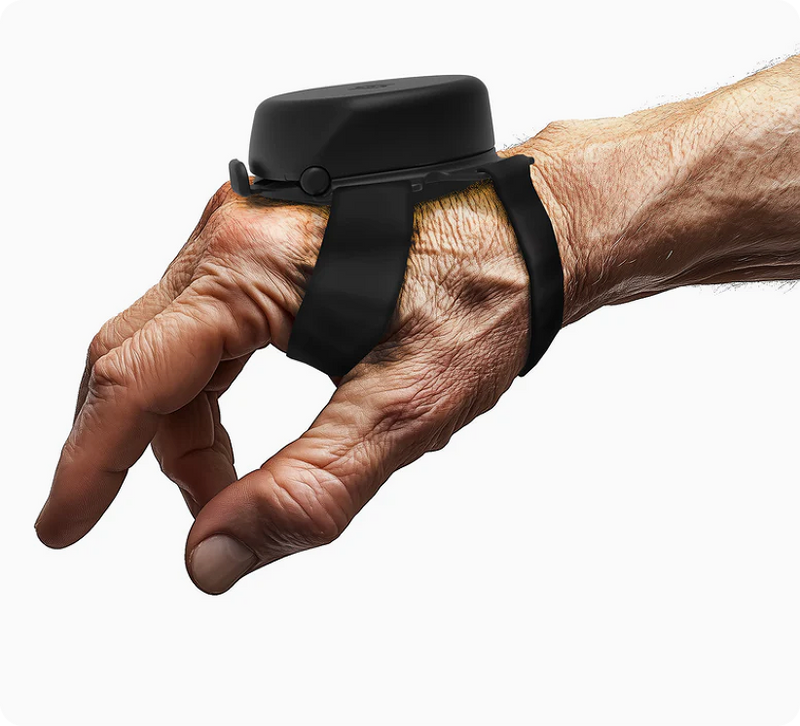
For Essential Tremor patients whose anxiety is primarily triggered by visible hand tremors in public or social settings, reducing tremor severity during daily tasks is a practical management step. The Steadi-3 is an FDA-registered Class I medical device that uses passive magnetic stabilization to reduce hand tremors. It requires no batteries or prescription and is validated in a placebo-controlled study showing improvement in 84% of users. It does not treat anxiety as a condition. A healthcare provider can advise whether it is appropriate for a patient's specific tremor type.
Frequently Asked Questions
Can anxiety cause Essential Tremor?
Anxiety does not cause Essential Tremor. Essential Tremor is a neurological condition with its own distinct pathology, present regardless of anxiety levels. However, anxiety is a well-documented aggravator of ET symptoms. It can significantly worsen tremor severity in real time through the body's adrenaline-driven stress response. Anxiety can also produce its own separate tremor, called enhanced physiologic tremor, which resolves when anxiety subsides. If you are unsure which applies to you, a neurologist can provide an accurate diagnosis.
What types of anxiety are most common in people with Essential Tremor?
The International Essential Tremor Foundation identifies four anxiety types most frequently seen alongside Essential Tremor: social anxiety disorder, involving fear of embarrassment or judgment in public; panic disorder, characterized by sudden intense fear episodes; agoraphobia, involving avoidance of situations where escape seems difficult; and generalized anxiety disorder, involving persistent excessive worry. Social anxiety disorder is particularly common in ET patients due to the visible nature of tremors. Accurate diagnosis by a healthcare provider determines which type is present and informs appropriate treatment.
Why does stress make my Essential Tremor worse?
Stress and anxiety activate the body's fight-or-flight response, causing the adrenal glands to release adrenaline. Adrenaline is a documented aggravator of involuntary movement, including the tremor associated with Essential Tremor and Parkinson's Disease. This is why tremors often feel noticeably worse during high-stress situations such as public speaking, dining in restaurants, or professional meetings. The stress is not causing the underlying neurological condition but is amplifying its visible severity. Managing stress through approaches recommended by a healthcare provider can help reduce this amplification.
Is there a difference between anxiety tremors and Essential Tremor?
Yes, there is a clinically important distinction. Anxiety tremors, also called enhanced physiologic tremor, are fine, rapid, and typically situation-specific. They tend to appear during moments of acute stress and resolve when anxiety decreases. Essential Tremor is a persistent neurological condition that causes rhythmic shaking regardless of emotional state, though anxiety can worsen its severity. A person can have Essential Tremor, anxiety-induced tremors, or both simultaneously. A neurologist is the appropriate provider for accurate diagnosis and is the recommended first step before pursuing any management strategy.
What can help manage both Essential Tremor and anxiety together?
Managing co-occurring Essential Tremor and anxiety works best through a combination of approaches coordinated with a healthcare provider. Cognitive behavioral therapy is the most evidence-supported psychological treatment for anxiety disorders in ET patients. Certain medications may address both anxiety and tremor simultaneously, though medication selection requires care because some antidepressants can worsen tremor. Assistive devices that reduce visible hand tremors can help address the social triggers that sustain anxiety. There is no cure for Essential Tremor, but both conditions respond to appropriate management. Consult a neurologist for a personalized plan.