

Why Natural Tremor Approaches Work
Parkinson's tremor stems from dopamine loss in the substantia nigra. Essential Tremor involves disrupted cerebellar circuits. Both respond to lifestyle intervention because key triggers — stress, fatigue, caffeine, poor sleep, and nutritional deficiencies — are directly addressable. Natural remedies for Essential Tremor and Parkinson's tremor reduce severity and improve functional control without altering the underlying neurological condition.

Build Your Daily Tremor Routine
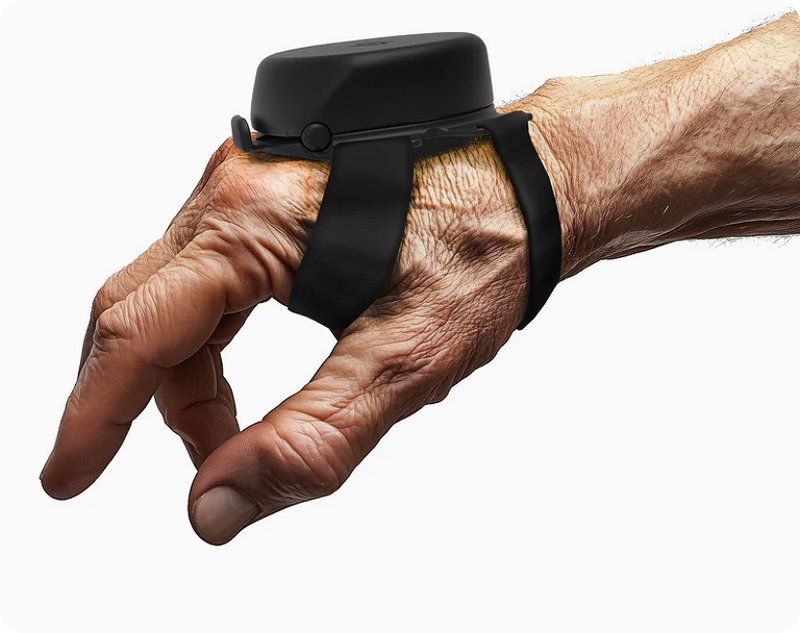
Hydrate and eat a B12-rich breakfast. Exercise during your medication "on" window if you have PD. Wear the Steadi-3 Plus during meals and writing tasks. Stop caffeine by early afternoon. End the day with ten minutes of breathing practice and a consistent sleep schedule.
The Steadi-3 Plus — A Wearable Non-Drug Alternative for Tremor Control
The Steadi-3 fills the gap that natural remedies cannot. A passive, battery-free wearable that stabilizes hand tremor during writing, eating, and daily tasks.
Exercises to Reduce Tremors Naturally
Fine Motor and Hand-Specific Exercises
Fine motor exercises reinforce the brain-to-muscle pathways that tremor disrupts, and consistent daily practice produces measurable improvement over time. Stress ball squeezes are among the most accessible entry points: hold the squeeze for 2 to 10 seconds, repeat 10 times per hand, and perform daily. The sustained grip activates motor pathways and builds hand strength, partially compensating for tremor-driven weakness.
Wrist rotations performed slowly and deliberately improve proprioceptive awareness, the body's sense of its own position, which is often reduced in both PD and Essential Tremor. Finger opposition drills, in which each finger is touched to the thumb in sequence, target the coordination circuits most affected by tremor. Picking up small objects such as coins or buttons as a daily five-minute drill trains fine motor precision in a functional context.
Writing practice with intentional, slow strokes is counterintuitive but supports motor retraining by forcing deliberate engagement of the motor pathway. For PD patients, these exercises produce the most benefit during the medication "on" period, typically thirty to sixty minutes after a levodopa dose, when dopamine availability is at its daily peak.
Whole-Body Exercise for Tremor Reduction
Whole-body exercise benefits tremor through multiple mechanisms: cardiovascular improvements, reductions in stress hormones, support for neuroplasticity, and direct dopaminergic effects. Tai chi is among the most well-researched movement practices for Parkinson's Disease, with multiple studies demonstrating improvements in balance, coordination, and motor control. Its slow, deliberate movement pattern activates the same intentional motor circuits targeted by fine motor exercises, while the meditative quality of the practice simultaneously reduces the stress response that worsens tremors.
Yoga supports activation of the parasympathetic nervous system, directly countering the cortisol-driven amplification of tremor that stress produces. Low-impact aerobic activity, including walking, swimming, and cycling, provides indirect benefits for tremor by improving cardiovascular health and clearing stress hormones. High-intensity interval training has attracted research attention for PD patients, with a 2023 pilot study from Yale linking HIIT protocols to improved dopaminergic signaling — making it potentially the highest-impact exercise intervention for Parkinson's tremor.
The LSVT Big program, a PD-specific movement therapy delivered by certified PTs, has clinical evidence supporting improvements in motor amplitude and reductions in movement hesitation. An OT or PT referral is recommended for patients who want to integrate LSVT Big into their management plan.
When to Exercise — Timing for PD Patients
For Parkinson's patients, exercise timing directly affects the quality of the session and the neuroplasticity benefit it produces. Motor function and tremor control are best during the medication "on" period, typically thirty to sixty minutes after a levodopa or dopamine agonist dose. Scheduling fine motor exercises and higher-intensity physical activity during this window maximizes the brain's capacity to reinforce motor pathways while dopamine availability is at its daily peak. For patients with Essential Tremor, timing is less critical. Tremor in ET is not tied to medication cycles, so consistency and progressive difficulty matter more than scheduling around a dosing window.
Diet and Nutrition Changes That May Reduce Tremors
Foods That Support Tremor Management
Diet influences tremor severity through its effects on neuroinflammation, neuromuscular transmission, and neurotransmitter production. The Mediterranean diet — emphasizing fruits, vegetables, legumes, whole grains, and healthy fats — is the most consistently supported dietary pattern for neurological health, with a 2022 review reporting a modest association between adherence to the Mediterranean diet and reduced tremor severity across movement disorder populations.
Omega-3 fatty acids found in fatty fish, walnuts, and flaxseed support anti-inflammatory neurological function and are among the most frequently cited nutritional recommendations for tremor management. Magnesium-rich foods, including leafy greens, nuts, and seeds, are worth prioritizing specifically: magnesium plays a direct role in neuromuscular transmission, and deficiency has been linked to increased tremor severity in several clinical reviews.
Hydration is a practical and frequently overlooked intervention — dehydration directly worsens tremor amplitude across all tremor types. A daily target of eight glasses of water, adjusted for body weight and activity level, is a reasonable baseline.
Supplements for Tremors: What to Consider
Vitamin B12 is the most clinically validated supplement for tremor management. B12 deficiency directly causes peripheral neuropathy, with tremor as a presenting symptom, and correcting the deficiency can produce a measurable reduction in tremor. Patients on metformin, proton pump inhibitors, or plant-based diets are at elevated risk for B12 deficiency and should discuss testing and supplementation with their neurologist. B1 and B6 deficiencies are less common but still worth addressing with a B-complex supplement, particularly for patients with limited dietary variety or malabsorption concerns.
Magnesium supplementation complements dietary magnesium intake, particularly for patients on diuretics or proton pump inhibitors, which can deplete magnesium stores. Among supplements for tremors with emerging evidence, passionflower extract has some support as a GABA-boosting herbal option that may reduce tremor frequency, though clinical trial data remain limited. It should be used only with physician approval, particularly when used alongside tremor medications, as interactions are possible.
Omega-3 supplementation is relevant for patients with low fish intake who cannot consistently meet dietary targets. The consistent disclaimer across all supplements: discuss any addition with your neurologist before starting, especially if you are on levodopa, beta-blockers, or anticonvulsants.
What to Avoid — Tremor Triggers in Diet
Caffeine is the most consistently documented dietary trigger of tremor. Its stimulant effect directly worsens both action and resting tremors by increasing sympathetic nervous system activation. Gradual reduction is recommended over abrupt cessation to avoid withdrawal tremors that can temporarily spike severity. Alcohol produces a short-term suppressant effect on Essential Tremor that is well-documented, but rebound worsening occurs as blood alcohol drops, and the practice of using alcohol to manage tremors leads to progressive neurological harm. It is not a management strategy under any circumstances.
Aspartame and other artificial sweeteners have limited but emerging evidence linking them to episodic worsening of movement. Eliminating them as a trial period of four to six weeks costs nothing and provides useful personal data. Processed and high-sugar foods contribute to systemic inflammation and blood sugar instability, both of which have been associated with worsening tremor. Reducing processed food intake as part of a broader shift toward a Mediterranean diet addresses multiple triggers of tremor simultaneously.
Stress, Sleep, and Nervous System Management
Cortisol and adrenaline amplify tremor signals via the sympathetic nervous system, making stress one of the most immediate and controllable triggers of tremor. When the body is under acute stress, the motor system becomes hyperexcitable, and tremor amplitude increases in direct proportion to the stress response. This mechanism is why tremors reliably worsen in high-pressure social situations, medical appointments, or emotionally charged conversations — and why stress reduction produces measurable benefits in tremor even without any change in diet or exercise.
Diaphragmatic breathing is the most accessible acute intervention for worsening stress-driven tremor. The 4-7-8 technique (inhale for four counts, hold for seven, exhale for eight) and box breathing (four counts in, four counts hold, four counts out, four counts hold) both activate the parasympathetic nervous system within minutes. Practiced during a tremor-worsening moment, either technique can produce a noticeable reduction in tremor amplitude.
Daily ten-minute meditation or mindfulness practice builds baseline stress tolerance, preventing the cortisol spikes that worsen tremors in the first place. Direct clinical evidence that meditation reduces tremor amplitude is modest, but the stress-management benefit is well established, and the indirect tremor benefit follows from it consistently.
Sleep is among the most powerful and most neglected tremor management tools. Fatigue is one of the most consistent tremor amplifiers across all tremor types, and sleep deprivation compounds the dopamine depletion and stress hormones that drive tremor severity. A minimum of seven hours of sleep per night is the evidence-based baseline.
Practical sleep hygiene measures include maintaining a consistent sleep and wake schedule every day, including weekends, eliminating screens for thirty minutes before bed, keeping the bedroom cool, and avoiding caffeine after early afternoon. For PD patients, nighttime motor symptoms can disrupt sleep quality even when total sleep time appears adequate — a sleep specialist referral may be warranted if fatigue remains severe despite adequate sleep duration.
Frequently Asked Questions