
Tremors at Work: Managing Tremors in the Workplace
Tremors at work affect people with Essential Tremor, Parkinson's Disease, and other neurological conditions. This page covers why tremors worsen in the workplace, what legal protections apply, and which practical tools help employees stay productive.

What Causes Tremors at Work, and Why They Often Get Worse
The most common neurological causes of tremors that affect working adults are Essential Tremor, Parkinson's Disease, multiple sclerosis, and medication-induced tremor. Each produces different tremor patterns, but all share a common aggravator: workplace stress. When the body perceives stress or anticipatory anxiety, it releases adrenaline, which measurably worsens tremor amplitude across all neurological tremor types. Fatigue, caffeine, and temperature extremes also compound symptoms. People who notice tremors worsening specifically at work should speak with a healthcare provider to identify the underlying cause before pursuing management strategies.
How Tremors Affect Specific Work Tasks
According to the Job Accommodation Network, people with Essential Tremor most commonly experience difficulty with writing, keyboarding, and mousing, grasping small tools or objects, and communicating in professional settings. Parkinson's Disease produces similar fine motor limitations, with the addition of resting tremors that can be visible to colleagues even without activity. Across both conditions, tasks requiring precision during observed situations, such as signing documents, presentations, and using shared tools, are consistently reported as the most difficult because observation itself can worsen tremor severity through anticipatory anxiety.

Your Legal Rights: Tremors and the ADA
The Americans with Disabilities Act does not list specific conditions as covered disabilities. Instead, a person qualifies if their impairment substantially limits one or more major life activities. For employees whose tremors significantly affect writing, typing, grasping, or communicating, this threshold is frequently met, whether the underlying condition is Essential Tremor, Parkinson's Disease, multiple sclerosis, or a medication-induced tremor. The Job Accommodation Network confirms that tremor-related conditions are addressed under the ADA. Individual eligibility depends on specific circumstances, and an HR representative or employment attorney can advise accordingly.
Why Workplace Stress Makes Tremors Worse
Workplace environments create predictable, repeated stress triggers for people with neurological tremors: scheduled presentations, performance evaluations, meetings where hand use is visible, and interactions with senior colleagues. In these settings, anticipatory anxiety releases adrenaline, which measurably worsens tremor amplitude across Essential Tremor and Parkinson's Disease. The resulting loss of control over visible symptoms can increase anxiety further, compounding the effect. Neurologists who treat movement disorders recognize this cycle and may address anticipatory anxiety as part of a broader tremor management plan, in conjunction with medication adjustments or assistive devices.

Practical Accommodations for Tremors in the Workplace
Practical workplace accommodations for tremors include speech recognition software to reduce keyboarding demand, alternative mouse devices that limit tremor interference, ergonomic tools with wider grips and reduced vibration, forearm support to anchor the hand during fine motor tasks, keyguards to prevent accidental keystrokes, flexible scheduling to align work with lower symptom periods, and assistive wearable devices. An occupational therapist can assess job-specific tasks and recommend targeted modifications. The Job Accommodation Network lists all of these as recognized options for patients with Essential Tremor and Parkinson's Disease. Needs vary significantly by condition and severity.
Talking to Your Employer About Tremors
Employees are not legally required to disclose a tremor diagnosis to their employer under the ADA. However, disclosure is typically necessary to request reasonable accommodations. Employees need only share information relevant to the affected job task, not a full medical history. A practical approach is to describe how the tremor affects specific tasks and what adjustments would help. Many employers respond constructively when the request focuses on productivity solutions rather than diagnosis details. HR departments can clarify the accommodation process, and an employment attorney can advise on individual rights.
Wearable Devices That Help Reduce Hand Tremors at Work
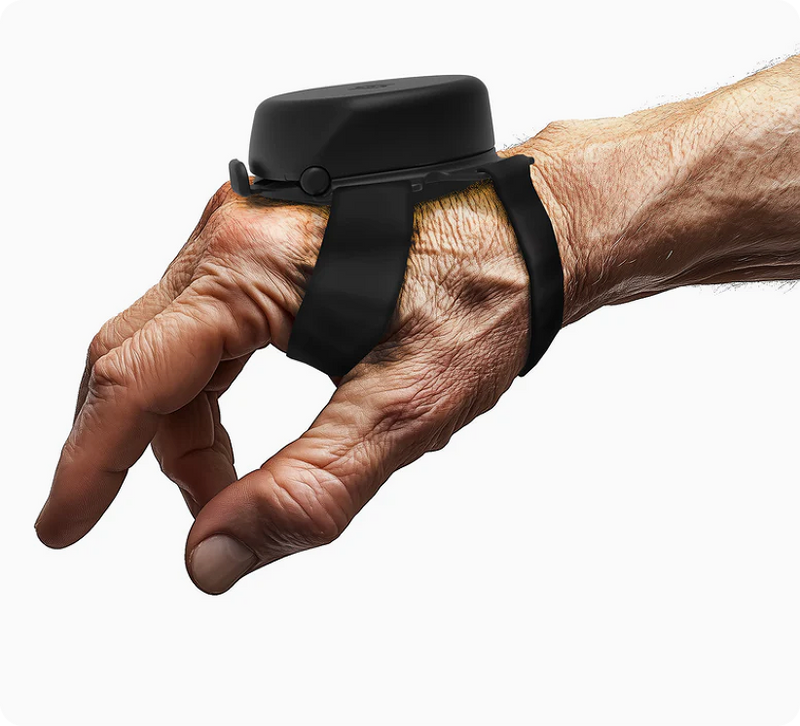
The Job Accommodation Network identifies anti-tremor wearable devices as a recognized accommodation for workplace tremors. The Steadi-3 is an FDA-registered Class I medical device that uses passive magnetic stabilization to reduce hand tremors during tasks such as writing, typing, and grasping, all common activities affected by Essential Tremor and Parkinson's Disease at work. It requires no batteries and no prescription. There is currently no cure for Essential Tremor or Parkinson's Disease, but validated tools such as the Steadi-3, supported in a placebo-controlled study showing improvement in 84% of users, can be used independently or alongside formal workplace accommodations to help maintain control during daily tasks. A healthcare provider can confirm suitability.
Frequently Asked Questions
Can tremors qualify as a disability under the ADA?
Tremors can qualify as a disability under the Americans with Disabilities Act if they substantially limit one or more major life activities such as writing, typing, grasping objects, or communicating. The ADA does not define specific conditions as covered disabilities; eligibility is determined on a case-by-case basis based on functional impact. Tremors caused by Essential Tremor, Parkinson's Disease, multiple sclerosis, and medication side effects are all addressed within the ADA framework according to the Job Accommodation Network. Employees who believe they may qualify should consult their HR department or an employment attorney for guidance specific to their situation.
Why do my tremors seem worse when I'm at work?
Tremors frequently worsen in workplace settings because of specific triggers that are common in professional environments: stress and anticipatory anxiety, fatigue accumulated during a workday, caffeine consumed to maintain productivity, and temperature extremes. For people with Essential Tremor or Parkinson's Disease, stress activates an adrenaline response that measurably increases tremor amplitude. High-visibility situations such as presentations, client meetings, and performance reviews are particularly likely to amplify tremors in real time. A neurologist can help identify which triggers apply to a specific tremor type and recommend appropriate management strategies.
What are the most common workplace accommodations for hand tremors?
Commonly recognized workplace accommodations for hand tremors include speech recognition software to reduce keyboarding demand, ergonomic or alternative mouse devices that limit tremor interference, forearm and wrist supports that anchor the hand during fine motor tasks, keyguards that prevent accidental keystrokes, anti-tremor wearable devices, and flexible scheduling to align task-heavy work with lower symptom periods. The Job Accommodation Network documents all of these as recognized options. Needs vary considerably depending on the underlying cause and severity of the tremor. An occupational therapist or HR representative can help identify the most relevant accommodations for a specific role.
Do I have to tell my employer about my tremors?
Employees are generally not required to disclose a tremor diagnosis to their employer under the ADA. However, disclosure is typically necessary to formally request reasonable accommodations. Employees do not need to share more medical information than is directly relevant to the requested accommodation. Many employees choose to frame the conversation around specific job tasks and practical adjustments rather than leading with a diagnosis. HR departments can clarify the employer's accommodation request process. An employment attorney can provide guidance on individual rights, particularly if an employee is concerned about how disclosure may affect their employment.
Can a wearable device help manage hand tremors during work tasks?
Wearable anti-tremor devices are listed by the Job Accommodation Network as a recognized workplace accommodation for neurological tremors. The Steadi-3 is an FDA-registered Class I medical device that uses passive magnetic stabilization to reduce hand tremors during tasks such as writing, typing, and grasping, tasks that are frequently affected by Essential Tremor and Parkinson's Disease in the workplace. It requires no batteries, no prescription, and no setup. Validated in a placebo-controlled study showing improvement in 84% of users, it can be worn during work hours alongside other accommodations. A healthcare provider can confirm whether it is appropriate for a specific type of tremor.