
Weighted Gloves for Tremors: A Complete Guide
Weighted gloves for tremors are wearable assistive tools that add resistance to the hand to reduce visible shaking during daily activities. People searching for them encounter a wide range of options, from basic fitness accessories to purpose-built medical devices. This guide covers how weighted gloves work, which tremor types and conditions they suit best, their limitations, and how passive magnetic stabilization compares as an alternative approach.
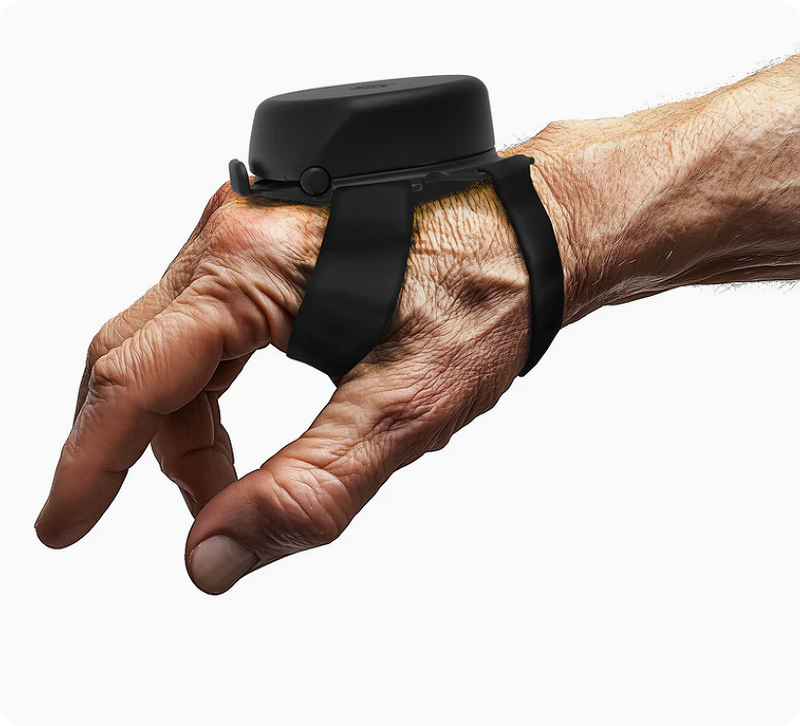

How weighted gloves work to reduce hand shaking
Weighted gloves add distributed weight across the back of the hand, increasing the mass the tremor must move to produce visible shaking. This dampening effect can reduce tremor amplitude during tasks like writing, eating, and drinking. The mechanism is passive and requires no electronics, but it is non-adaptive: the glove does not respond to tremor frequency or severity. Occupational therapists commonly recommend weighted gloves for mild to moderate action tremor. There is no cure for Essential Tremor or Parkinson's Disease; weighted gloves are a management tool only.
What conditions benefit most from weighted gloves
Weighted gloves are most commonly used for Essential Tremor, particularly action tremor during intentional movement such as lifting, writing, or eating. They are less effective for resting tremor, more characteristic of Parkinson's Disease, which occurs when the hand is at rest. Weighted gloves are best suited for mild to moderate severity; heavier tremors may require more targeted stabilization. Consult a neurologist or occupational therapist to confirm tremor type before selecting a device. Neither Essential Tremor nor Parkinson's Disease has a known cure; devices support daily independence.

The limitations of weighted gloves for tremors
Added weight can cause hand fatigue during prolonged use, particularly for older adults or those with reduced grip strength. Weighted gloves do not adapt to tremor frequency or direction; a fixed weight cannot selectively counteract tremor patterns. Dexterity may be reduced for fine motor tasks. Short-term use for specific tasks is typically more comfortable than all-day wear. Passive magnetic stabilization, as used in the Steadi-3, works through a tuned mass damper that responds to tremor motion rather than adding dead weight to the hand.
Weighted gloves for Essential Tremor versus Parkinson's Disease
Essential Tremor produces action tremor during voluntary movement, making weighted gloves moderately effective for writing, eating, and similar tasks. Parkinson's Disease tremor is primarily a resting tremor that occurs when the limb is at rest and often diminishes during movement. Weighted gloves are less effective for resting tremor because the dampening benefit is most pronounced during active use. Both conditions are progressive; device needs may change over time. A neurologist or movement disorder specialist is best positioned to recommend the right approach for each patient.

Key features to look for in a tremor glove
Weight distribution should sit across the back of the hand to preserve finger mobility and grip. Open-palm or fingerless designs allow full range of finger motion for fine motor tasks. Breathable fabric reduces fatigue; adjustable straps accommodate different hand sizes. For medical-grade tremor devices, FDA registration signals a higher standard than fitness-grade gloves. The Steadi-3 is an FDA-registered Class I medical device supported by a placebo-controlled study in which 84% of users demonstrated measurable tremor reduction. A healthcare provider can help guide device selection.
How passive magnetic stabilization differs from weighted gloves
A traditional weighted glove reduces tremor amplitude by adding load to the hand. The Steadi-3 uses passive magnetic stabilization through a tuned mass damper that moves in the opposite direction of the tremor, dissipating energy without batteries or electronics. Because the damper responds to actual tremor motion rather than adding dead weight, it does not increase hand fatigue in the same way. The Steadi-3 is an FDA-registered Class I medical device. There is currently no cure for Essential Tremor or Parkinson's Disease; both approaches are management tools.
Who should consider a medical-grade tremor stabilization device
Weighted gloves are a reasonable first step for individuals with mild tremor seeking low-cost management during specific daily tasks. A medical-grade device like the Steadi-3 may be worth considering for individuals whose tremor significantly affects multiple daily activities or who prefer a clinically validated, battery-free option. The Steadi-3 is eligible for FSA and HSA reimbursement, and a Letter of Medical Necessity template is available to support claims. Consulting a neurologist or occupational therapist before selecting any tremor management device is strongly recommended.
Frequently Asked Questions
Do weighted gloves actually help with hand tremors?
Yes, weighted gloves can reduce the visible amplitude of hand tremors during active tasks by adding resistance. Results vary by tremor type, severity, and individual tolerance; they work best for mild to moderate action tremor associated with Essential Tremor. They are a management tool only; there is no cure for Essential Tremor or Parkinson's Disease. A healthcare provider or occupational therapist can help determine whether weighted gloves are appropriate and recommend the right weight level.
Are weighted gloves good for Parkinson's tremors?
Weighted gloves can provide some benefit for Parkinson's Disease tremors, but effectiveness is more limited than for Essential Tremor. Parkinson's tremor is primarily a resting tremor that occurs when the hand is at rest and often decreases during intentional movement, which reduces the dampening benefit of added weight. Some patients find partial relief during active tasks such as eating; outcomes vary by individual and tremor presentation. Always consult a movement disorder specialist or neurologist before selecting a tremor management device.
What is the difference between a weighted glove and an anti-tremor device?
A standard weighted glove reduces tremor amplitude by adding mass to the hand. A medical-grade anti-tremor device uses a more targeted mechanism; the Steadi-3 uses passive magnetic stabilization through a tuned mass damper that responds to the user's tremor motion rather than simply adding weight. Anti-tremor devices are typically FDA-registered and supported by clinical validation data; many weighted gloves are fitness products not designed as medical devices. The right choice depends on tremor severity, daily activity demands, and professional guidance.
Do wrist weights help with Essential Tremor?
Wrist weights can reduce visible tremor amplitude for some people with Essential Tremor, particularly during tasks requiring deliberate hand movement. The dampening effect is more consistent when weight is distributed across the back of the hand rather than concentrated at the wrist. An occupational therapist can help identify the appropriate weight and style for each person's tremor pattern. Wrist weights and weighted gloves are management tools; Essential Tremor has no known cure. The goal is supporting daily control and independence.
Can I use FSA or HSA funds to pay for a tremor stabilization device?
Yes, the Steadi-3 is eligible for FSA and HSA reimbursement as an FDA-registered Class I medical device. Steadiwear provides a downloadable Letter of Medical Necessity template to support reimbursement claims through benefits administrators. Standard consumer-grade weighted gloves may or may not qualify; FSA/HSA eligibility for those products depends on the specific plan and whether a healthcare provider has prescribed them for a diagnosed condition. Confirm eligibility with your benefits administrator before purchase.