Medically reviewed by Steadiwear's neurology advisory board, including Dr. Jerome Lisk and Dr. Philippe Rizek.
If you've been diagnosed with Essential Tremor, one question keeps coming back: Can Essential Tremor turn into Parkinson's Disease? It's one of the most common questions neurologists hear from newly diagnosed patients. The short answer is no, but the full picture is more nuanced, and understanding the real Essential Tremor Parkinson connection is what actually reduces the anxiety.
The Short Answer — And Why It's More Complicated Than You Think
No, Essential Tremor does not turn into Parkinson's Disease. They are distinct neurological conditions with different causes, brain pathways, prognoses, and treatments — and that answer is consistent with every major clinical authority. But the Essential Tremor Parkinson connection is more nuanced than most articles explain: some ET patients do develop Parkinson's later, not because ET converted, but as a second, separate condition. Here's what the research actually says and which warning signs matter.
Why ET and PD Are Often Confused — Even by Doctors
If you've been unsure about your diagnosis, you're not alone — the confusion is built into the conditions themselves. Both cause rhythmic hand shaking, both appear in adults over 40–60, and neither has a definitive biomarker test. Tremor-dominant Parkinson's (TDPD) complicates things further by mimicking ET early on. Studies estimate 15–37% of ET cases are initially misdiagnosed, and Essential Tremor misdiagnosed as Parkinson's happens in both directions. If your diagnosis feels uncertain, see a movement disorder specialist.
What the Research Actually Shows About ET-to-PD Progression
Does Essential Tremor progress to Parkinson's, or is Essential Tremor related to Parkinson's at all? The answer is nuanced.
ET Does Not Convert to PD
Several studies have found ET patients carry a modestly elevated risk of separately developing Parkinson's. The relationship is unidirectional.
What the Research Suggests About Why the Link Exists
One hypothesis points to early Lewy body pathology; variants in the LINGO1 gene show genetic overlap.
What "Higher Risk" Means in Practice
Most ET patients won't develop Parkinson's. Know the warning signs and report meaningful changes to your neurologist.
What Causes the Elevated PD Risk in ET Patients?

Why is Essential Tremor related to Parkinson's in the first place? Researchers don't have one answer — they have several working theories. Some ET patients show early Lewy body pathology in the brainstem, the same protein clumps that drive PD. Others share genetic markers, including LINGO1 variants. A third possibility: ET and PD may sit on overlapping neurological pathways rather than being fully separate conditions. The Essential Tremor Parkinson connection likely involves a subset of patients, not all.
Why Age Matters in ET-to-PD Risk Assessment
Does Essential Tremor progress to Parkinson's at different rates depending on age? Research suggests yes. ET patients diagnosed later in life — particularly after age 65 — appear to carry a higher relative risk of separately developing Parkinson's than those diagnosed in their 30s or 40s. Long-standing ET (20+ years) also correlates with slightly elevated risk. This doesn't mean older ET patients will develop PD; it means age and duration are variables neurologists consider when deciding how closely to monitor.
Signs That Your ET Might Actually Be Early PD
If you have ET and any of these develop, talk to a movement disorder specialist — they don't confirm Parkinson's, but they justify re-evaluation:
-
A new resting tremor — shaking when the hand is still, not during movement.
-
Asymmetric worsening — one side noticeably worse than the other.
-
New slowness or stiffness — bradykinesia or rigidity are not features of ET.
-
Loss of smell — a well-documented prodromal marker of Parkinson's.
-
Acting out dreams — REM sleep behavior disorder is clinically meaningful alongside tremor.
Only a specialist with a full neurological exam and, when warranted, DaTscan imaging, can confirm a diagnosis.
How ET and PD Are Treated Differently
Getting the right diagnosis matters because treatment differs significantly. ET responds to propranolol (a beta-blocker) and primidone (an anti-seizure medication) — neither helps Parkinson's tremor. PD responds to levodopa, which replenishes dopamine; levodopa typically does nothing for Essential Tremor. If medication for one condition isn't working, that can sometimes be a diagnostic clue. Deep-brain stimulation (DBS) is an option for severe cases of both. Knowing whether Essential Tremor is related to Parkinson's in your case directly shapes what medications are likely to work.
How to Monitor Your Tremors Over Time
Between appointments, you're your neurologist's best source of data — so how you track symptoms matters.
Keep a simple tremor diary. Note when shaking occurs, which body parts are affected, and what makes it better or worse.
Record short videos. A 30–60 second clip of your hands at rest and during a task gives your neurologist far more than a verbal description.
Ask about the Essential Tremor Rating Scale (ETRS). This validated tool establishes a measurable baseline.
Seek a second opinion from a movement disorder specialist if your diagnosis feels uncertain.
What to Tell Your Neurologist at Your Next Visit
If you're worried your ET might be turning into Parkinson's, what you say at your appointment matters. Describe when shaking happens — at rest or during movement. Mention any asymmetry, stiffness, smell changes, or sleep disturbances. Bring your tremor diary and video recordings. Ask directly: "Could this be early Parkinson's, or Essential Tremor misdiagnosed as Parkinson's?" Specialists appreciate specific, documented concerns over vague worry. The clearer your report, the faster they can decide whether re-evaluation or imaging is warranted.
Common Myths About the ET-PD Connection
A few myths consistently generate anxiety.
-
Myth 1: Essential Tremor getting worse means it's becoming Parkinson's. It doesn't — ET naturally progresses in amplitude over the years.
-
Myth 2: If a family member has PD, your ET will convert. Genetic overlap exists, but conversion doesn't.
-
Myth 3: DaTscan can diagnose ET. It can't — DaTscan detects dopamine loss in PD, and ET patients show normal results. Understanding what the Essential Tremor Parkinson connection actually is helps separate real warning signs from unfounded fear.
Managing Tremors Regardless of Diagnosis With Steadiwear

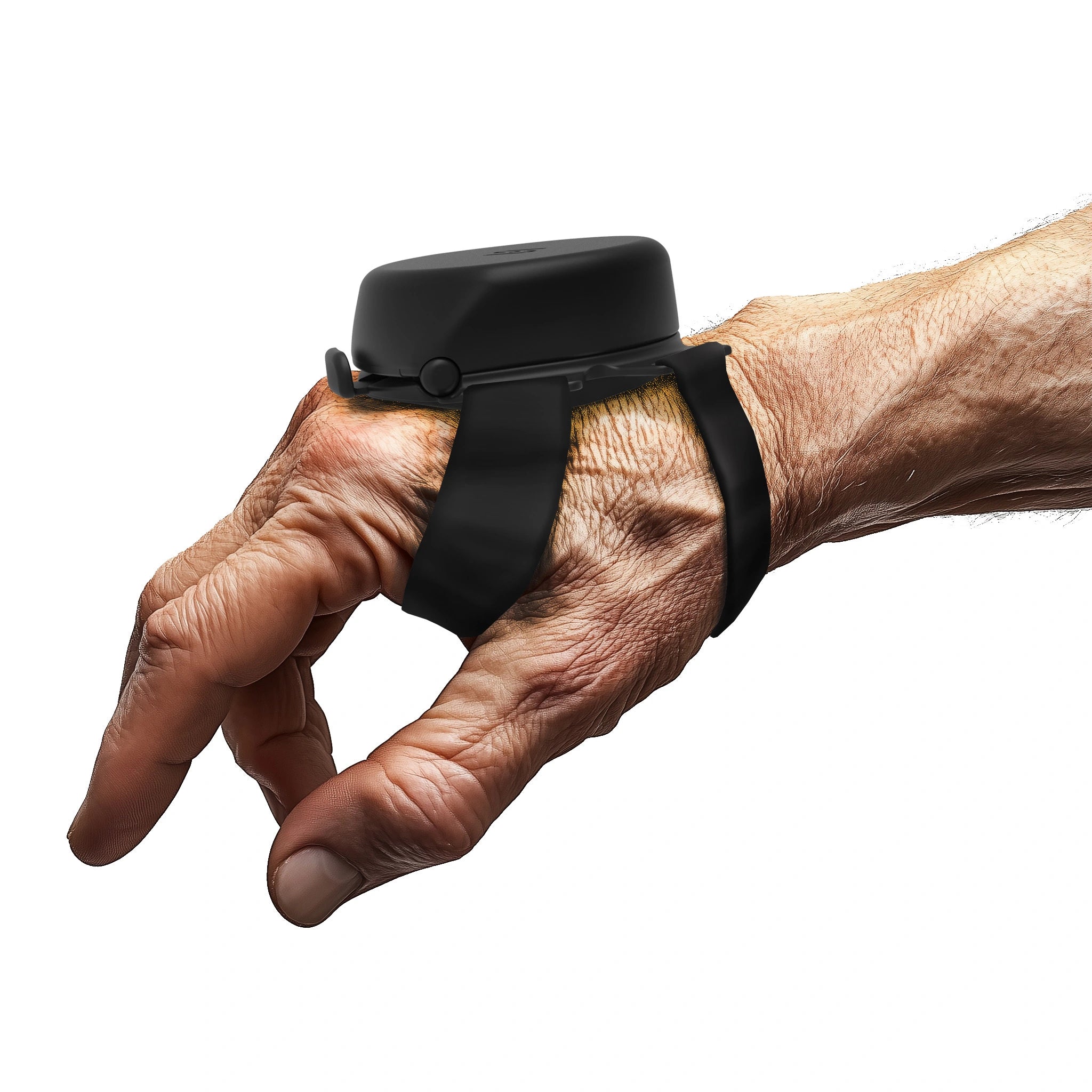
Whether your tremor is ET, PD, or both, it's affecting your daily tasks right now — and that's worth addressing while the diagnostic process unfolds. The Steadi-3 by Steadiwear is designed for both Essential Tremor and Parkinson's tremor. Its passive magnetic dampening technology works on the mechanics of hand tremor, regardless of its neurological origin. It's battery-free, weighs 290 grams, is FDA-registered as a Class I medical device, and validated in a placebo-controlled study to show improved tremor control in 84% of participants.
Learn how the Steadi-3 works for both ET and PD tremors.
Conclusion
Essential Tremor does not turn into Parkinson's Disease. They are separate conditions with different biological pathways. ET patients do carry a modestly elevated risk of separately developing Parkinson's, which is why knowing the prodromal signs and monitoring symptoms over time has real clinical value. If your tremor changes — particularly if a resting component appears, asymmetry develops, or slowness, stiffness, smell loss, or REM sleep disruption show up — re-evaluation by a movement disorder specialist is the right next step.