Medically reviewed by Steadiwear's neurology advisory board, including Dr. Jerome Lisk and Dr. Philippe Rizek.
Trying to understand the difference between Essential Tremor and Parkinson's? You're not alone — it's one of the most common diagnostic questions in neurology, and most patients never get a clear explanation. This neurologist-reviewed guide walks you through the 12 clinical signs used to distinguish Essential Tremor from Parkinson's Disease, so you can understand what your tremor is telling you.
Why Essential Tremor and Parkinson's Disease Are So Often Confused
If you've noticed a hand tremor, you're almost certainly weighing the same two possibilities: Essential Tremor or Parkinson's Disease — one of the most common diagnostic mix-ups in neurology. Essential Tremor affects an estimated 10 million Americans, roughly eight times the 1 million living with Parkinson's, yet Parkinson's is the diagnosis patients fear most. Below are the 12 key differences specialists use to answer "how to tell if you have Essential Tremor or Parkinson's" and explain the real difference between Essential Tremor and Parkinson's.
How to Tell If You Have Essential Tremor or Parkinson's
Before diving into the 12 differences, a quick self-check can point you in the right direction. Ask yourself: does your hand shake when you're reaching for something, or when it's resting in your lap? Is the tremor on both sides, or mostly one? Do you notice stiffness, slowness of movement, or changes in your walk? Action tremor on both hands suggests Essential Tremor. Resting tremor on one side with stiffness or slower movement points toward Parkinson's — consult a movement disorder specialist for evaluation.
Differences 1–3 — How the Tremor Itself Behaves
Difference 1 — When the Tremor Occurs
Essential Tremor is an action tremor — shaking appears during movement. Parkinson's is a resting tremor — most visible when the hand is relaxed. The resting tremor vs action tremor distinction anchors every evaluation.
Difference 2 — How Fast the Tremor Shakes
-
Essential Tremor typically oscillates at 8–12 Hz — faster and finer in amplitude.
-
Parkinson's tremor runs slower at 4–6 Hz and is more forceful.
Difference 3 — Which Side Is Affected First
Essential Tremor starts bilaterally. Parkinson's almost always starts on one side and spreads over the years.
Differences 4–6 — What Else Happens in Each Condition
Difference 4 — ET Is Tremor Only; PD Is Not
Essential Tremor is an isolated tremor disorder; significant non-tremor symptoms make ET unlikely. Parkinson's involves the motor triad: bradykinesia, rigidity, and postural instability.
Difference 5 — Head and Voice Involvement
ET can cause visible head tremor (yes-yes or no-no nodding) and a shaky voice. Parkinson's rarely does, but may produce soft speech and reduced facial expression.
Difference 6 — Gait and Balance
ET doesn't affect gait. Parkinson's causes a shuffling walk, reduced arm swing, stooped posture, and eventual freezing.
Differences 7–9 — Cause, Progression, and Genetics
Difference 7 — What Causes Each Condition
Parkinson's results from degeneration of dopamine-producing neurons in the substantia nigra. ET's cause is less clear — changes in cerebellar circuits are implicated. Environmental exposures (pesticides, pollution) link to PD, not ET.
Difference 8 — Hereditary Patterns
ET is hereditary in 50–70% of cases, with LINGO1 implicated. Parkinson's is hereditary in only 10–15%. A strong family history of tremor is consistent with ET.
Difference 9 — How Each Condition Progresses
ET is slowly progressive, has no staging system, and doesn't shorten life. Parkinson's progresses through Hoehn-Yahr stages 1–5. ET doesn't turn into PD.
Differences 10–12 — Diagnosis and Treatment Approaches
Difference 10 — How Diagnosis Works
Neither has a single definitive test. PD can be supported by DaTscan imaging and the levodopa challenge. ET is diagnosed clinically by a movement disorder specialist.
Difference 11 — First-Line Medications
ET is treated with propranolol and primidone. PD's gold standard is levodopa, which addresses the dopamine deficit. Levodopa typically doesn't help ET — itself a diagnostic clue.
Difference 12 — Non-Pharmacological Options
Deep brain stimulation helps severe cases of both conditions. Wearable tremor-stabilizing devices offer ET and PD patients a non-invasive, drug-free way to manage hand tremor during daily activities.
Resting Tremor vs Action Tremor
If you remember only one thing from this guide, make it this: the difference between a resting tremor and an action tremor is how neurologists decide between Parkinson's and Essential Tremor within the first minute of an exam.
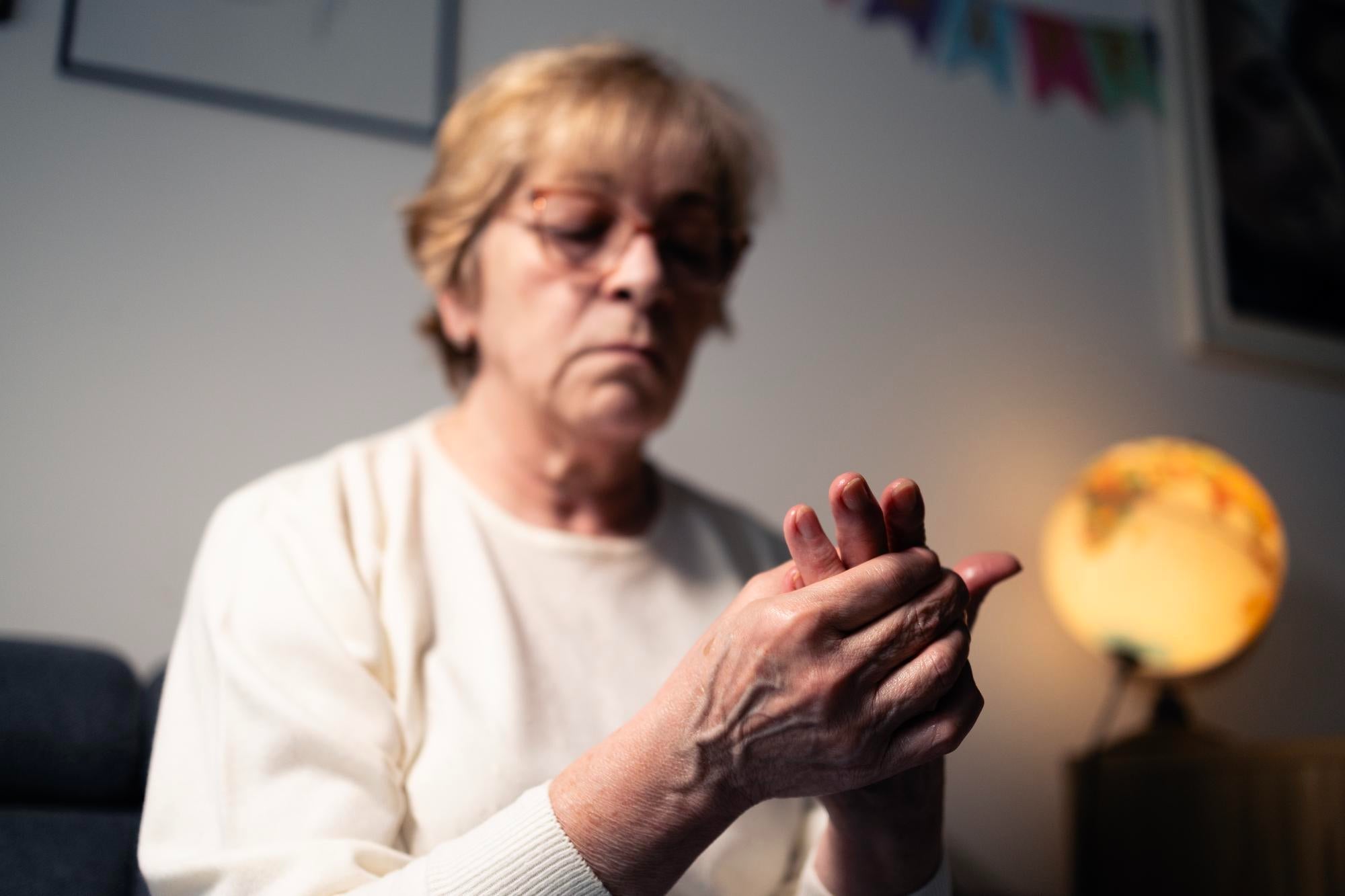
A resting tremor appears when your hand lies still on your lap — typical of Parkinson's. An action tremor appears the moment you reach, pour, or hold a posture — the hallmark of ET. Watch yourself eat soup: shake while reaching is action tremor.
Essential Tremor Misdiagnosis
If the misdiagnosis rate for Essential Tremor concerns you, here's a practical path. Start by writing down when your tremor happens, which hand it affects first, and whether medication has helped. Bring a short video of your hand at rest and during action — neurologists find this highly useful. Request a referral to a movement disorder specialist, not a general neurologist. DaTscan imaging or a levodopa trial can help if Parkinson's is suspected. Clarification, not confrontation, is the goal.
When Symptoms Overlap — The Grey Zone

Some cases don't fit neatly. Tremor-dominant Parkinson's (TDPD) presents mostly with tremor and minimal bradykinesia, making it clinically indistinguishable from ET without imaging. Misdiagnosis runs both ways — some ET patients are later found to have PD, and vice versa. The two can co-exist; research suggests up to 20% of ET patients may develop PD. If a tremor previously diagnosed as ET worsens rapidly, develops a resting component, or is accompanied by new motor symptoms, re-evaluation by a movement disorder specialist is warranted.
When Essential Tremor Is Misdiagnosed as Parkinson's
Essential tremor is more commonly misdiagnosed than most patients realize. Studies estimate 15–37% of ET cases are initially misidentified — usually as Parkinson's, and occasionally the reverse. Two factors drive this: overlapping symptoms in early stages, and the absence of a definitive diagnostic test. If you were diagnosed quickly by a general practitioner, or your medication isn't helping, that's worth raising with a movement disorder specialist. A second opinion doesn't undermine your current care — it clarifies the path forward.
Managing Tremors for Both Conditions With Steadi-3 Plus

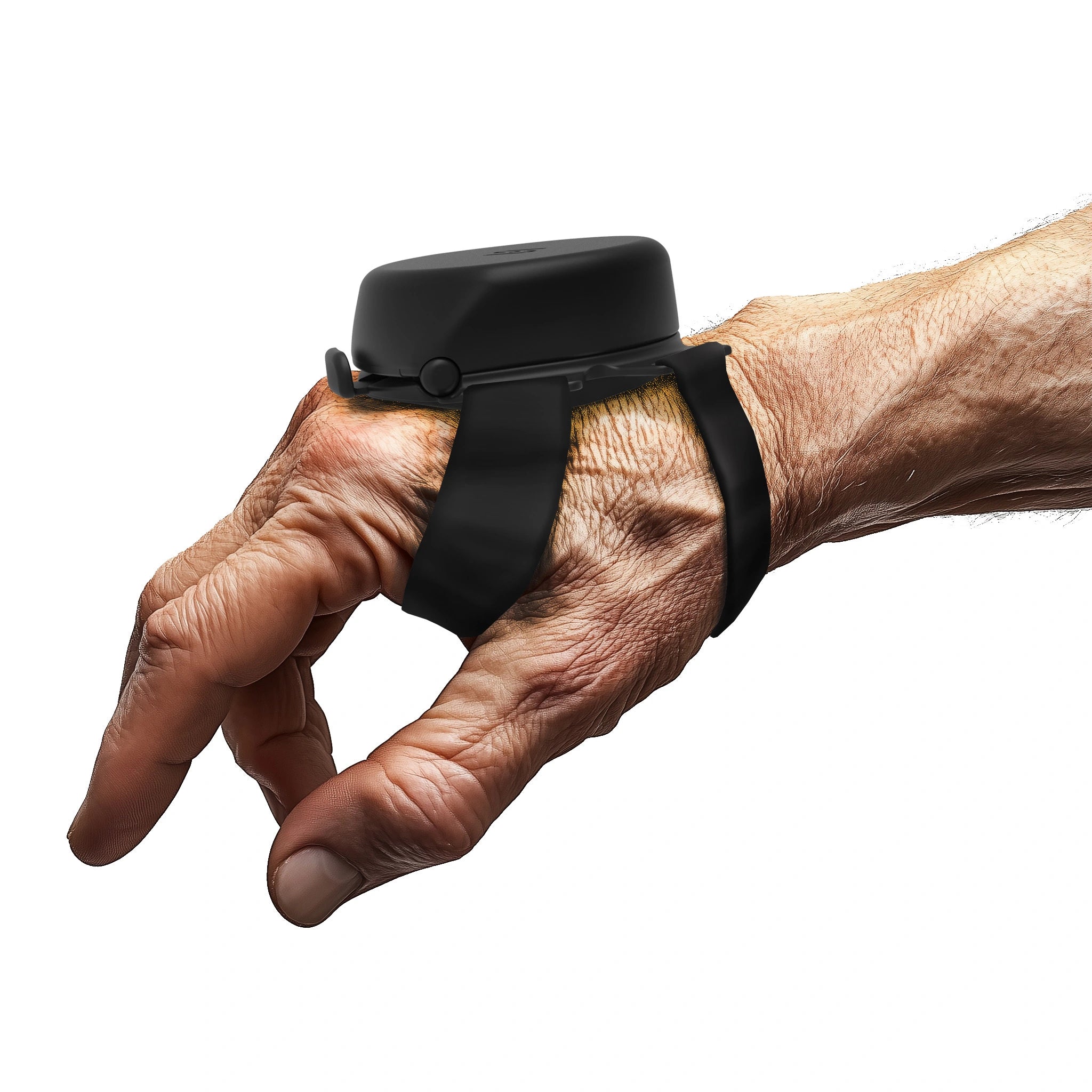
Managing hand tremor — whether ET or Parkinson's — usually involves a combination of medication, therapy, and assistive technology. Wearable stabilization devices now reduce tremor during real tasks without adding medication burden. For ET, the goal is to restore independence in eating, writing, and drinking. For Parkinson's, a hand-tremor device works alongside levodopa, which often leaves tremor incompletely controlled. The Steadi-3 by Steadiwear is a battery-free, magnetic-dampening glove validated in a placebo-controlled study for both conditions, with 84% of participants showing improved tremor control. Weighing just 290g, it's FDA-registered as a Class I medical device.
Conclusion
The core distinction between Essential Tremor and Parkinson's Disease is behavioral: ET shakes during action; Parkinson's shakes at rest. That single observation anchors every clinical evaluation. Beyond the tremor itself, the presence or absence of bradykinesia, rigidity, and gait changes separates the two far more reliably than appearance alone. Neither condition has a single definitive test, and accurate diagnosis requires a movement disorder specialist. The good news: both are manageable, and the right diagnosis leads to the right treatment.