Fear of being judged for tremors is a documented clinical consequence of Essential Tremor, affecting the majority of people living with this neurological condition. Being watched, misread, and silently evaluated is separately measurable from the tremor itself. This article explains why the fear occurs, what research shows about how observers actually perceive tremors, and what evidence-based strategies reduce the burden.
What Clinical Research Says About Fear of Judgment in Essential Tremor
Essential tremor embarrassment is one of the most consistently reported experiences, with 74% of patients reporting it in IETF research. Clinical research has now quantified fear of judgment in Essential Tremor. O'Suilleabhain et al. (2023, UT Southwestern) developed the ETStig instrument, measuring three dimensions: perceived stigma (recalled stigma incidents), psychological distress (emotional impact), and social dysfunction (behavioral avoidance). The study found that almost all ET patients reported perceived stigma. More than one in three -- 33.8% -- met criteria for social dysfunction. IETF research found that 74% of ET patients felt embarrassed by their tremor, and 65% acknowledged avoiding social situations because of it.
What Others Actually See When They Notice a Tremor: The Visibility Gap
Research on how tremor is perceived by others consistently shows that patients overestimate their visibility to observers. Self-focused attention — monitoring one's own hands during a task — amplifies the internal sense of tremor severity without changing what observers register. When observers do notice tremor, O'Suilleabhain et al. (2023) confirm the most common reactions are misattribution to nervousness, frailty, or intoxication. The gap between feared visibility and actual perception is real and documented. Disclosure directly corrects the misattributions that underlie the most common incidents of Essential Tremor stigma.
Why Some People with Essential Tremor Are More Affected Than Others
Not all ET patients experience fear of judgment equally. O'Suilleabhain et al. (2023) identified three risk factors. Younger patients face higher social projection demands professionally and in dating contexts, with a significant age-tremor interaction in stigma severity. Female sex carries an odds ratio of 4.3 for social dysfunction -- women with the same perceived stigma are four times more likely than men to develop avoidance behaviors. Vocal tremor is an independent predictor because voice is harder to conceal. These variations are clinically documented.
How Fear of Judgment Becomes Learned Avoidance: The Conditioning Mechanism
O'Suilleabhain et al. (2023) cite Holding and Lew in a finding with significant clinical implications: pharmacologic tremor suppression did not reduce social embarrassment in one study. The emotional response had become fixed through respondent conditioning—the brain learned to associate specific social settings with anticipated embarrassment, and avoidance persisted even after the tremor was reduced. For some patients, treating the tremor alone is insufficient. Both the physical tremor and the conditioned psychological avoidance need to be targeted. This pattern is responsive to treatment.
The Three Dimensions of Tremor Stigma: Which One Is Affecting You Most?
The ETStig instrument makes essential tremor stigma dimensions separable and actionable. Perceived stigma encompasses recalled incidents — being stared at, questioned, or misread. Psychological distress covers the emotional pain and rumination that those incidents cause. Social dysfunction covers the behavioral changes that follow: avoiding restaurants, declining invitations, keeping a low profile. O'Suilleabhain (2023) found that depression and stigma distress independently predict social dysfunction, with depression carrying an odds ratio of 1.5. Identifying which dimension is most active helps direct appropriate support, whether medical, psychological, or community-based.
Specific Situations That Trigger Fear of Judgment Most

Fear of judgment in Essential Tremor peaks in situations sharing a common feature: observable motor performance under social evaluation. Eating at restaurants makes hand movements visible. Handshakes involve direct transfer of physical tremor at first contact. Signing documents, presenting, and job interviews place motor performance under scrutiny. First dates involve early impression formation. Group sports and games, as described by O'Suilleabhain (2023), require visible physical participation. Each setting intensifies fear in proportion to how much the patient feels evaluated by observers at that moment.
What Does Not Help: And Why Concealment Makes It Worse
Essential tremor and alcohol use as a pre-social coping strategy is explicitly documented as a maladaptive avoidance behavior in O'Suilleabhain et al. (2023). Concealment strategies are among the most common responses to fear of judgment and among the most counterproductive. Sitting on hands, pre-drinking before events, and keeping a low profile reduce visible tremor in the short term but create secondary costs. Constant self-monitoring amplifies perceived tremor severity. Concealment reinforces the conditioned fear response by confirming the situation as one to be avoided. O'Suilleabhain (2023) identifies keeping a low profile and using alcohol before socializing as maladaptive avoidance strategies that sustain social dysfunction while feeling protective.
Evidence-Based Strategies That Actually Help: Without Avoidance or Concealment
Evidence-based strategies address both the physical and psychological dimensions. Situational use of propranolol before specific high-judgment events, under physician direction, reduces tremor amplitude. Cognitive behavioral therapy is the primary evidence-based intervention for essential tremor social anxiety driven by conditioned avoidance. Graduated exposure, beginning with lower-social-evaluation settings and progressing, reduces fear through direct experience. Treating depression when present independently reduces social dysfunction. Disclosure to specific people reduces the concealment burden. A neurologist and mental health professional working together provide the most complete management pathway.
Essential Tremor stigma and situational fear of judgment are different from a diagnosable condition such as social anxiety disorder, which some people with Essential Tremor also experience. The situational response described throughout this article is tied specifically to tremor-related moments, while Essential Tremor social anxiety involves broader, more persistent patterns that extend beyond those situations. When fear of judgment becomes pervasive rather than situational, evaluation by a mental health professional is the appropriate next step to determine whether a separate, diagnosable condition is present.
Talking About Your Tremor: How Disclosure Reduces the Fear of Being Watched
Disclosure reduces fear of judgment through three mechanisms. It pre-empts misattribution — the nervousness, frailty, and intoxication assumptions that generate the most common Essential Tremor stigma incidents. It removes the cognitive load of concealment in relationships where disclosure has been made. It converts potential observers into informed social allies. O'Suilleabhain (2023) identifies misattribution as the primary driver of perceived stigma, making interpersonal correction the most direct mitigation. Disclosure is calibrated by relationship and context. Simple, factual framing is most effective. No explanation is required in every setting.
Building Resilience Against Social Judgment: What the Research Identifies
Depression is the single highest-impact modifiable factor in ET-related social dysfunction. O'Suilleabhain (2023) found that depression independently predicts social dysfunction at an odds ratio of 1.5, meaning addressing it reduces avoidance regardless of tremor severity. The psychosocial consequences of Essential Tremor are independently documented as drivers of social dysfunction beyond tremor severity alone. Professional psychological support addresses conditioned avoidance and stigma distress directly. Community connection provides a social context in which tremor is not the visible anomaly, reducing the demand for social evaluation. The IETF worldwide support group directory and the Essential Tremor community resource provide access to this context and peer support.
How Steadi-3 Helps Reduce Tremor Visibility

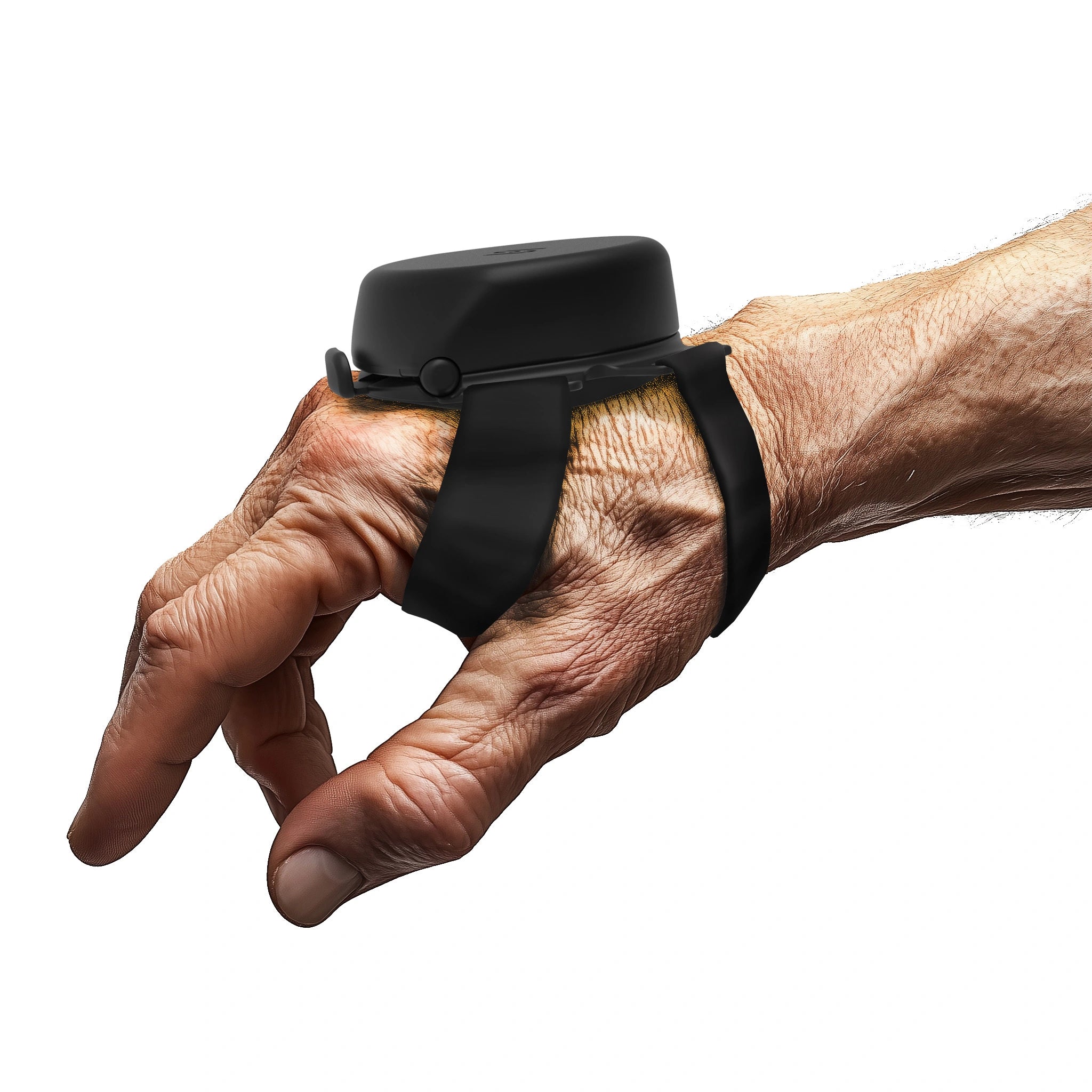
Reducing visible hand tremor in settings that trigger fear of judgment directly addresses the stimulus driving the conditioned response. The Steadi-3 is an FDA-registered Class I medical device that uses passive magnetic stabilization to reduce action and postural tremors, without batteries or electronic components. In a placebo-controlled study, 84% of users experienced reduced tremor. Tremor management alone may not fully resolve conditioned avoidance -- psychological support is often also needed. Patients should consult a healthcare provider before adding any device. The Steadi-3 validation study provides clinical detail.
Conclusion
Fear of being judged for tremors affects the majority of Essential Tremor patients and is now clinically documented, measurable, and addressable. The management approach combines physical tremor management, psychological work targeting conditioned avoidance, depression treatment when present, disclosure as an Essential Tremor stigma-reduction tool, and community connection as a resilience resource. There is no cure for Essential Tremor, but the fear's hold on daily participation can be reduced with the right professional support. The Steadi-3 product page, community resource, and companion social withdrawal post provide further guidance.